
Take Control of Your Health and Wellbeing with Essential Oils
Find out what essential oils are, how they work, and how they can help you get the results you want!
 Certified ToxicFree® · Cruelty-free · Made in Colorado
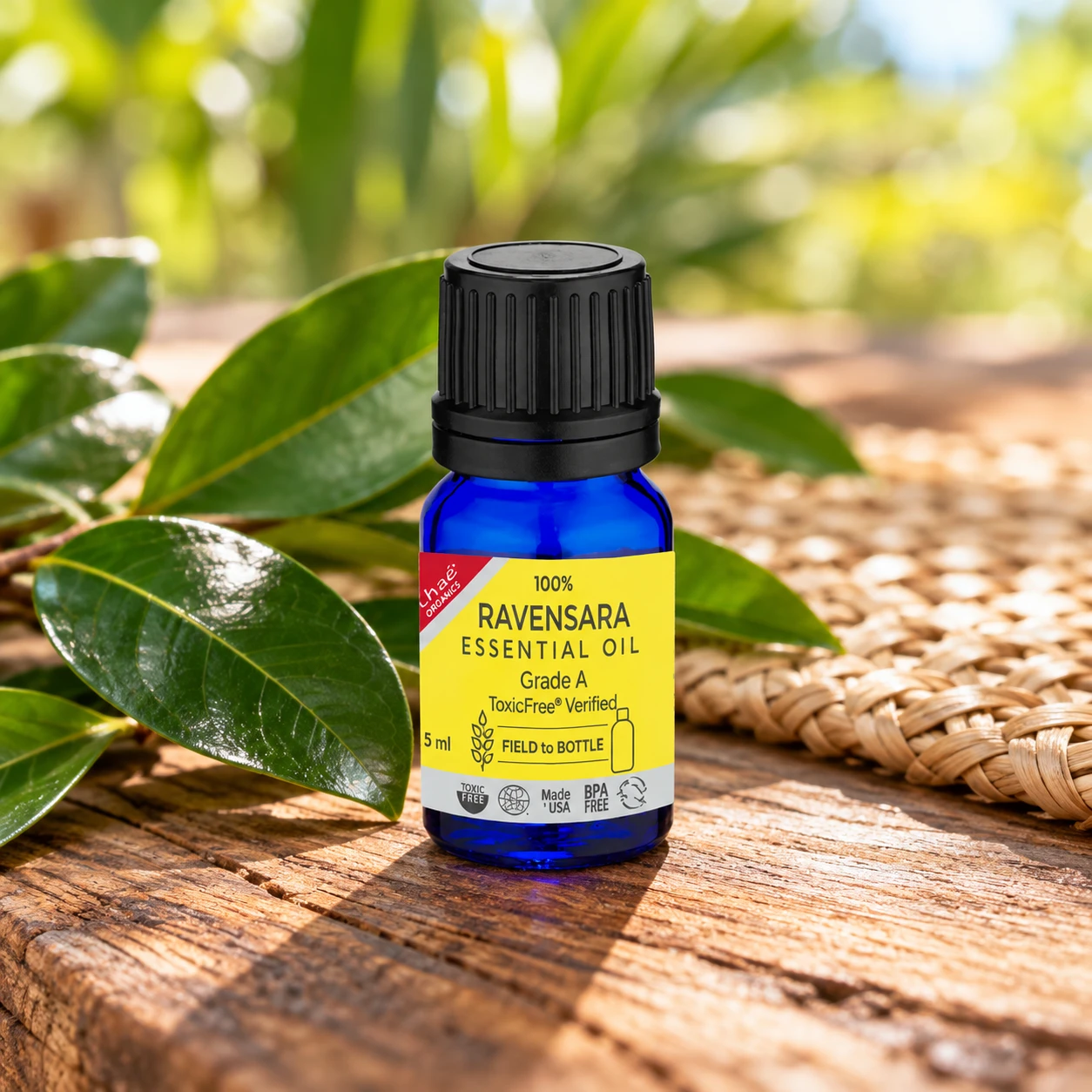
Ravensara is one of the rarer oils on our shelf: sweet, spicy and camphor-fresh, from a tree that grows only in Madagascar. Here is what it is, how it differs from ravintsara, a different tree with an almost identical name, and how to use it safely.
Madagascar gives the world two essential oils with nearly the same name. Ravensara and ravintsara come from different trees, smell different and carry different cautions, yet they have been mixed up for decades.
Ours is ravensara, a leaf oil from a tall, strongly aromatic tree with broad, dark leaves and reddish bark that grows only in the tropical mountain forests of Madagascar. The tree can’t survive even a slightly colder-than-average winter, which is part of what makes the oil so rare.
It is a diffuser oil first. The scent is complex and a little mysterious, and ravensara’s chemistry varies enough from tree to tree that we keep skin use to a trace.
The short version
Ravensara is a member of the laurel family that grows wild only in Madagascar. Its name comes from Malagasy: Ravensara is a Latinized form of ravintsara, a word usually translated as “good leaf”. That shared root is where the confusion starts.
The oil is made by steam distillation of the fragrant leaves: steam passes through them, carries the aromatic oil with it, and the oil separates from the water as it cools. Ours is made only from the healthiest, most oil-rich trees.
Ravensara aromatica is the name the tree was given in 1782, and the one the essential oil trade still uses. It is the name on our bottle. In 2008, botanists moved the tree into the genus Cryptocarya under a new name, Cryptocarya agathophylla, so you may see that name in plant databases. It is the same tree.
They are different trees in different genera, and their oils are not interchangeable.
Ravintsara comes from the camphor tree, Cinnamomum camphora, which is native to East Asia and has long been grown in Madagascar. The Madagascan trees give a leaf oil rich in 1,8-cineole, the molecule behind eucalyptus’s sharp, clearing smell. Robert Tisserand, co-author of Essential Oil Safety, has pointed out that it is essentially the cineole type of ho leaf, as camphor-tree leaf oil is known in China.
Ravensara, our oil, comes from a tree found only in Madagascar, and its chemistry is far more varied. A study of 28 Ravensara aromatica trees found four distinct types of leaf oil: one dominated by methyl chavicol (also called estragole), one by methyleugenol, and two by lighter, fresher molecules such as sabinene, limonene and α-terpinene.
| Ravensara | Ravintsara | |
|---|---|---|
| The tree | Ravensara aromatica (also listed as Cryptocarya agathophylla) | Cinnamomum camphora, the camphor tree |
| Native to | Madagascar only | East Asia; grown in Madagascar |
| Part used | Leaves (a bark oil also exists) | Leaves |
| Main scent molecules | Varies from tree to tree: sabinene, limonene or α-terpinene in some, estragole or methyleugenol in others | Mostly 1,8-cineole |
| Scent | Sweet and spicy, with hints of eucalyptus and camphor over warm wood | Sharp, fresh and eucalyptus-like |
| Main caution | Some oils contain estragole or methyleugenol: diffuser first, only a trace on skin | Rich in 1,8-cineole: keep it off the faces of babies and young children |
To tell them apart, read the botanical name. Ours says Ravensara aromatica, leaf, from Madagascar.
No. Ravensara oil isn’t phototoxic. Phototoxic oils contain furocoumarins, compounds that react with sunlight on the skin and can cause redness, blistering or dark patches that last for months. They show up mainly in cold-pressed citrus oils such as bergamot, lime and bitter orange, which is why those carry real sun limits. Ravensara doesn’t contain them.
The sun note on our product pages is a general caution we give for every oil. Ravensara itself isn’t known to cause sun reactions.
Ravensara is sweet and spicy up front, with fresh hints of eucalyptus and camphor over warm, woody undertones: complex and a little mysterious. In the diffuser it feels fresh and uplifting by day, and its woody side settles into something calm and cozy by evening.
It pairs naturally with citrus and woody oils. A few diffuser blends to try, in drops for a standard water diffuser:
This is where ravensara shines. Start with 2 to 3 drops in the water reservoir and adjust from there. Diffuse for 30 to 60 minutes at a time, in a room with some airflow.
For a warm, spicy-fresh scent in a living room or entryway, mix in a 100 ml (about 3.4 oz) glass spray bottle:
Shake well before every spray, since oil and water separate. Mist into the air rather than onto people or pets, and test on a hidden spot before spraying fabric.
Only a trace, well diluted, and here is why.
Two of the molecules that can turn up in ravensara, estragole (methyl chavicol) and methyleugenol, caused cancer in animal studies at high doses, and both are restricted in fragrances under IFRA standards. Ravensara bark oil is almost entirely estragole; ours is leaf oil. Leaf oils usually contain far less, but they vary from tree to tree.
Tisserand and Young set a maximum of 1% for ravensara leaf oil on skin, based on its estragole. Because ravensara varies so much, we suggest staying well under that:
Search “ravensara oil benefits” and you will find long lists about colds, immunity and more. Much of that comes from traditional use or lab studies, not from a diffuser at home, and because the two oils have been confused for so long, some of what you read about ravensara was really written about ravintsara. In the U.S., an oil sold to treat a health problem is regulated as a drug; ours is sold for its scent, and we don’t make health claims for it. If you are managing a health condition, talk with your doctor.
A few simple habits keep ravensara pleasant:
A few things on the label tell you a lot:
Ravensara is the collector’s oil: rare, Madagascan, sweet and spicy over warm wood. Check the label for Ravensara aromatica so you don’t end up with ravintsara. It isn’t phototoxic, but it is a diffuser oil first: keep skin use to a trace, and a few drops will make a room feel fresh by day and cozy by evening.
No. Ravensara comes from Ravensara aromatica, a tree found only in Madagascar. Ravintsara comes from the camphor tree, Cinnamomum camphora, and its oil is mostly 1,8-cineole. The names share a Malagasy root, which is why they get mixed up. Ours is ravensara.
We sell it for its scent: a fresh, spicy-sweet diffuser oil traditionally used in aromatherapy to lift the feel of a room. Many “benefits” lists online mix it up with ravintsara, and we don’t make health claims for it.
Sweet and spicy up front, with fresh hints of eucalyptus and camphor over warm, woody undertones. It blends well with citrus and woody oils.
Only a trace: no more than 1 drop in 10 ml of carrier oil, on the body, not the face. Some ravensara oils contain estragole or methyleugenol, so we treat it as a diffuser oil first, and we don’t use it on children’s skin.
Be careful, especially with cats. Diffuse only briefly, in a ventilated room your pet can leave, and never apply oils to a pet. Ask your vet if your pet has breathing problems.
Every Chaé essential oil is 100% pure, Grade A, Certified ToxicFree® and Leaping Bunny certified, with the plant named on the label. Start with ravensara, then add a citrus or a woody partner.
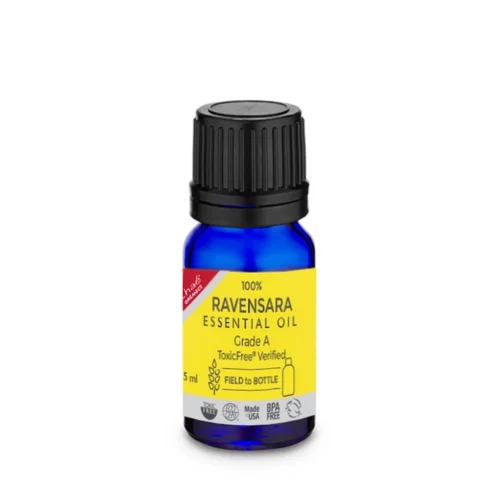
A rare Madagascan leaf oil — sweet, spicy and camphor-fresh over warm, woody depths.
Sweet, tangy and juicy—blood orange brings a sunny, mellow mood to any room.

Step into a Mediterranean cypress grove: earthy, woody and faintly citrusy.
Traceable, fair-trade frankincense with a spicy, earthy warmth and a hint of fruit.
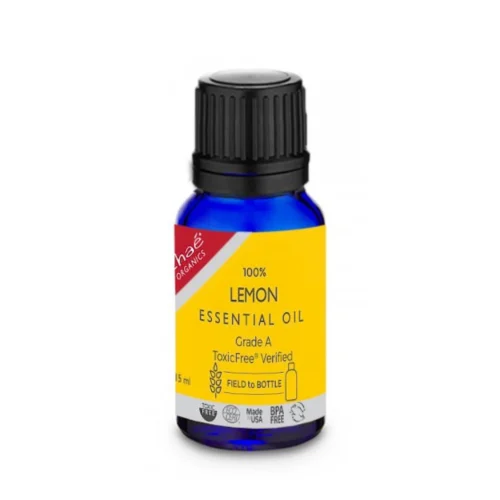
Sharp, sparkling lemon zest—sunshine in a bottle for your mood and your home.
Find out what essential oils are, how they work, and how they can help you get the results you want!
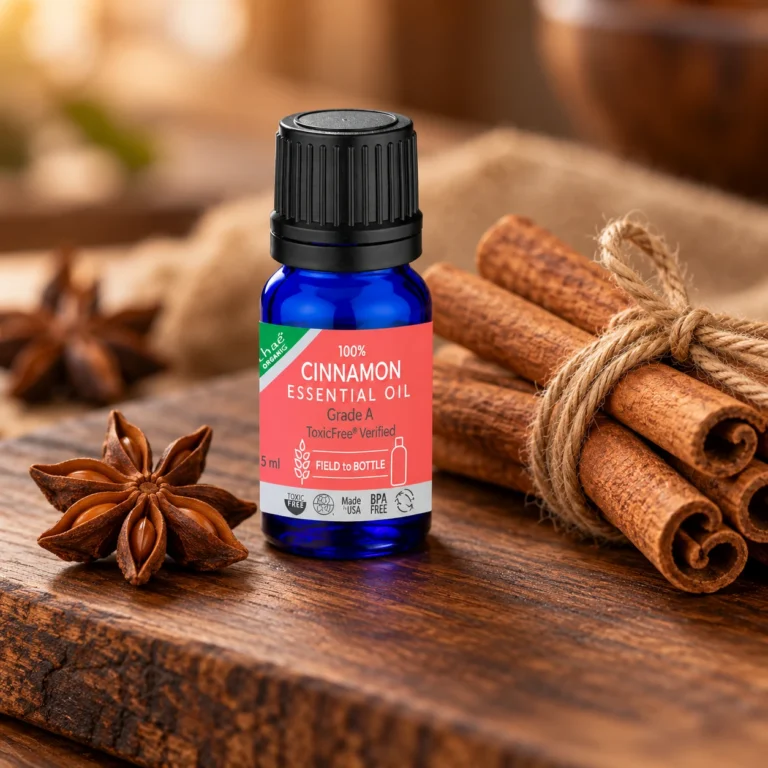
Cinnamon essential oil smells like baking day: sweet, spicy and deeply warm. It is also one of the strongest oils there is…
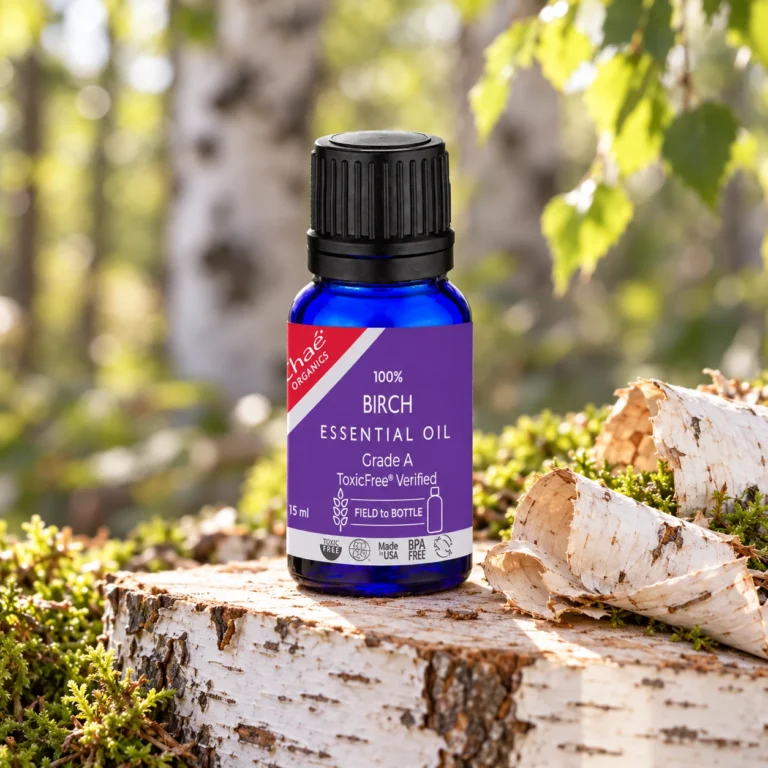
Birch essential oil: its clean, woody scent, diffuser blends, and why birch carries strong cautions for kids, pregnancy, cats and anyone on…
Sign up for ToxicFree® tips, new arrivals and member-only offers. Your code arrives in your welcome email.

Sign in to check out faster, track orders and manage Subscribe & Save.