
Take Control of Your Health and Wellbeing with Essential Oils
Find out what essential oils are, how they work, and how they can help you get the results you want!
 Certified ToxicFree® · Cruelty-free · Made in Colorado
Grapefruit oil smells like the first cut into a cold grapefruit: juicy, bittersweet and wide awake. It is also mildly phototoxic. Here is what that means, the exact limit for skin, and the best ways to use it.
Grapefruit is the citrus for people who like a little bite. Its oil doesn’t have the candy sweetness of orange or the sharp sourness of lemon. It is juicy and tart with a bitter edge, the smell of a pink grapefruit cut open at breakfast.
It can also react with sunlight on skin. Grapefruit is much milder in this respect than bergamot or lime, but mild isn’t zero, and the limit is worth knowing.
The short version
Grapefruit is a young fruit as citrus goes: a natural cross of pomelo and sweet orange, first recorded in the Caribbean in the 1700s. Its name likely comes from the way the fruit hangs in heavy clusters, like grapes.

The oil lives in glands set deep in the thick peel, which makes it harder to extract than most citrus oils. Ours is cold-pressed from the peels of grapefruit hand-picked with precise timing, grown in the humid warmth of a subtropical climate in orchards free of synthetic fertilizers and pesticides.
Like most citrus peel oils, grapefruit oil is mostly limonene, usually around 90 to 95%. Its signature smell comes from much smaller players, especially nootkatone, a molecule present in tiny amounts, typically under 1%, that gives grapefruit its bittersweet character.
You may know that grapefruit can interfere with some medicines. The FDA requires some drug labels to warn against it. That warning is about eating grapefruit or drinking its juice. We don’t recommend swallowing any essential oil, and if you take medication, ask your doctor or pharmacist before using essential oils.
Yes, mildly. Cold-pressed grapefruit oil contains small amounts of furocoumarins, including bergapten, the same sun-reactive compounds that make bergamot and lime phototoxic. Grapefruit simply has far less of them. Robert Tisserand describes expressed grapefruit oil as slightly phototoxic, and its limit is much higher than bergamot’s or lime’s.
Go over it, and the furocoumarins left on skin react with UVA light from the sun or a tanning bed. The skin can redden or blister hours later, and patchy brown marks can last for weeks or months. It doesn’t hurt at first, so people often don’t connect it with the oil.
In Essential Oil Safety, Tisserand and Young set a maximum of 4% for cold-pressed grapefruit oil on skin that will be exposed to sunlight. IFRA, which sets the fragrance industry’s safety standards, uses the same 4% for leave-on products. Here is what that looks like:
If you go above 4%, the Tisserand Institute’s advice is to keep that skin out of sunlight and UV for at least 12 hours, either by covering it completely or by staying indoors. Before sunbathing or a tanning bed, skip phototoxic oils on skin completely.
Phototoxic oils add up. Grapefruit and lime are a classic pair, but lime’s limit is only 0.7%, so in a body oil think in shares of each limit. For example, 6 drops grapefruit (a quarter of its limit) plus 2 drops lime (about half of its limit) in 30 ml stays comfortably under. Our lime guide has the details.
Wash-off products are a different story. In soap, shower gel or a bath, the oil is rinsed away, and the risk is considered negligible.
Ours is cold-pressed, so it is phototoxic like any expressed grapefruit oil. Our directions go a step further than the 4% limit and say to keep it off any skin that will be in the sun. That’s the simplest rule to live by: if you’re heading outside, enjoy grapefruit in the diffuser, not on your skin.
Grapefruit is a sparkling top note: juicy and tart, bittersweet rather than sugary, with the unmistakable tang of fresh grapefruit and a subtle earthy undertone. Many people find it energizing when the afternoon drags.
A few diffuser blends to try, in drops for a standard water diffuser:
Start with 3 to 5 drops in the water reservoir. Phototoxicity is about oil left on skin, so diffusing doesn’t raise it. Diffuse for 30 to 60 minutes at a time rather than all day, in a room with some airflow.
For a zesty, just-peeled scent, mix in a 100 ml (about 3.4 oz) glass spray bottle:
Use glass: concentrated citrus oil can soften some plastics. Shake well before every spray, since oil and water separate. Mist into the air rather than onto people or pets, and test on a hidden spot before spraying fabric or finished surfaces. Think of it as a room freshener: essential oils add scent, they don’t replace your cleaner.
For a bright body oil, stir 6 drops grapefruit into 30 ml (1 oz) of jojoba or sweet almond oil, about 1%. Patch test on your inner arm first, keep it away from your eyes, and, as our label says, keep it off skin that will be in the sun.
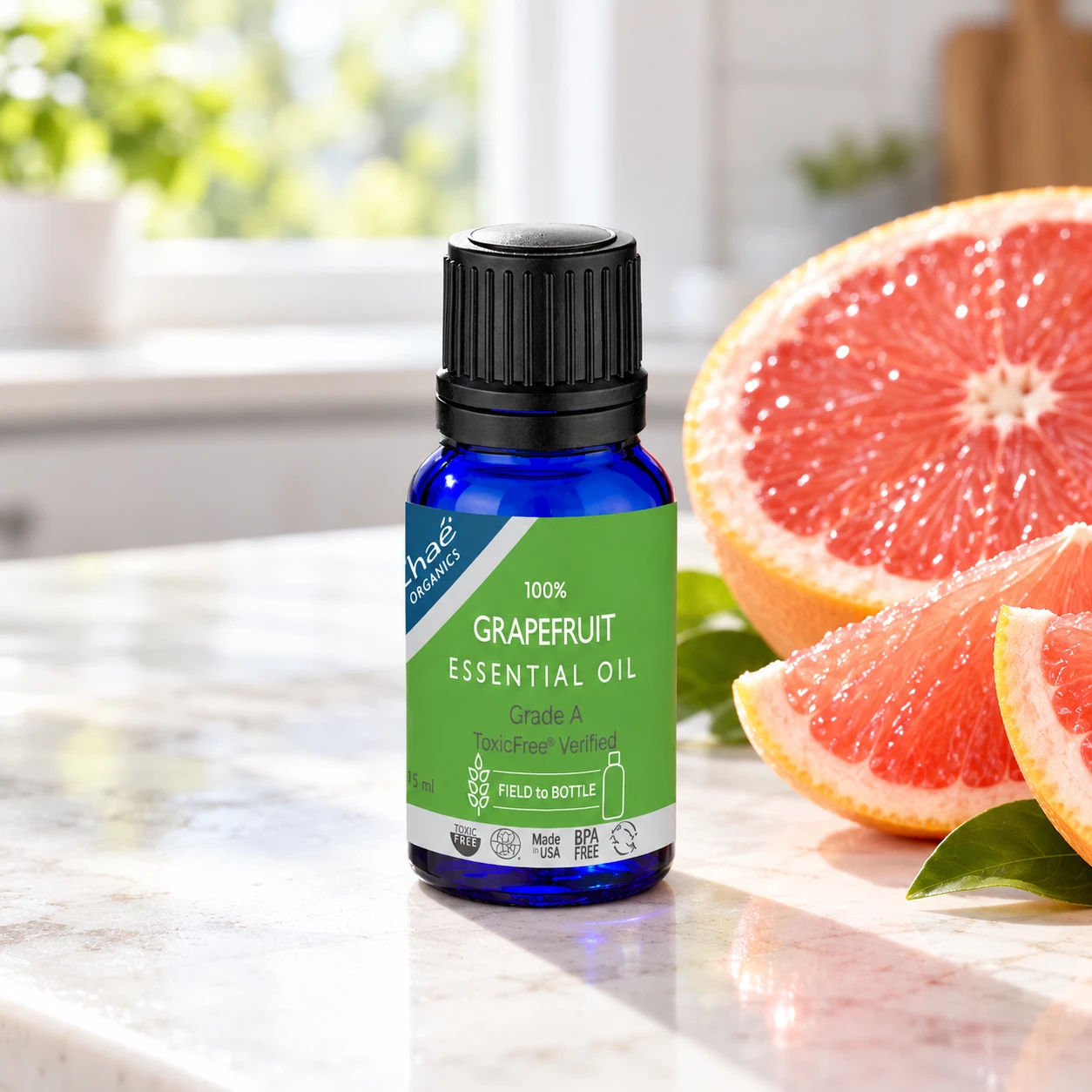
Search “grapefruit oil benefits” and you will find claims about appetite, weight loss and cellulite. Much of that comes from animal studies or small, specific trials, not from a diffuser or a body oil at home. In the U.S., an oil sold to treat a health problem is regulated as a drug; ours is sold for its scent, and we don’t make health claims for it. If you are managing a health condition, talk with your doctor.
A few things on the label tell you a lot:
Grapefruit is the bittersweet, wide-awake citrus, perfect for afternoons and kitchens. It is mildly phototoxic, with a 4% ceiling on skin that will see the sun, and our label keeps it off sun-bound skin altogether. Diffuse it freely, keep it fresh, and any room will smell like a just-cut grapefruit.
Mildly, yes. Cold-pressed grapefruit oil contains small amounts of bergapten and related furocoumarins. Tisserand and Young’s maximum on skin exposed to the sun is 4%, and IFRA uses the same figure.
No more than 4%, which is 24 drops in 30 ml (1 oz) of carrier oil or 8 drops in a 10 ml roller. Our label is stricter: keep it off skin that will be in the sun.
If you’ve used more than 4% on skin, keep that skin out of sunlight and UV, including tanning beds, for at least 12 hours, by covering it or staying indoors.
Be careful. The ASPCA lists grapefruit as toxic to cats and dogs because of its essential oils and psoralens. Diffuse only briefly in a ventilated room your pet can leave, and never apply oils to a pet.
Counting from the day you open it, about 6 to 12 months at room temperature, or 1 to 2 years tightly capped in the fridge. If it smells flat or “off”, replace it.
Every Chaé essential oil is 100% pure, Grade A, Certified ToxicFree® and Leaping Bunny certified, with the plant named on the label. Start with grapefruit, then build a blend.
Juicy, bittersweet grapefruit with a tangy snap—an instant afternoon refresh.

Zesty, green lime with a sweet edge—the wakeful scent of an early summer morning.
Sweet, rosy florals, distilled on the family farm where the plants are grown.

Step into a Mediterranean cypress grove: earthy, woody and faintly citrusy.
The sweet, easygoing mint: soft, rounded spearmint that’s gentler than peppermint.

Find out what essential oils are, how they work, and how they can help you get the results you want!
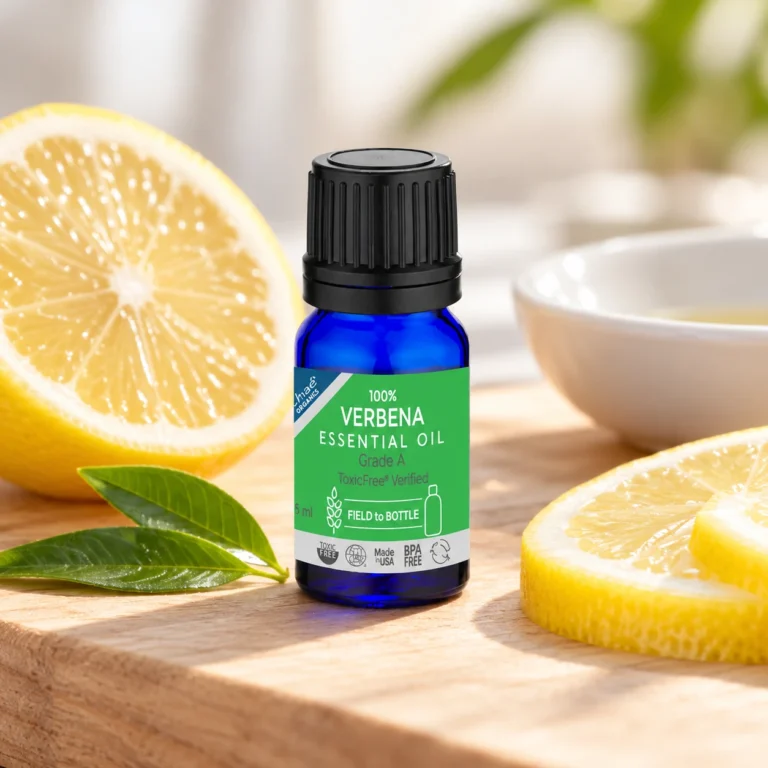
Verbena essential oil (Verbena officinalis): how it differs from lemon verbena, what it smells like, diffuser and room-mist blends, and why it's…
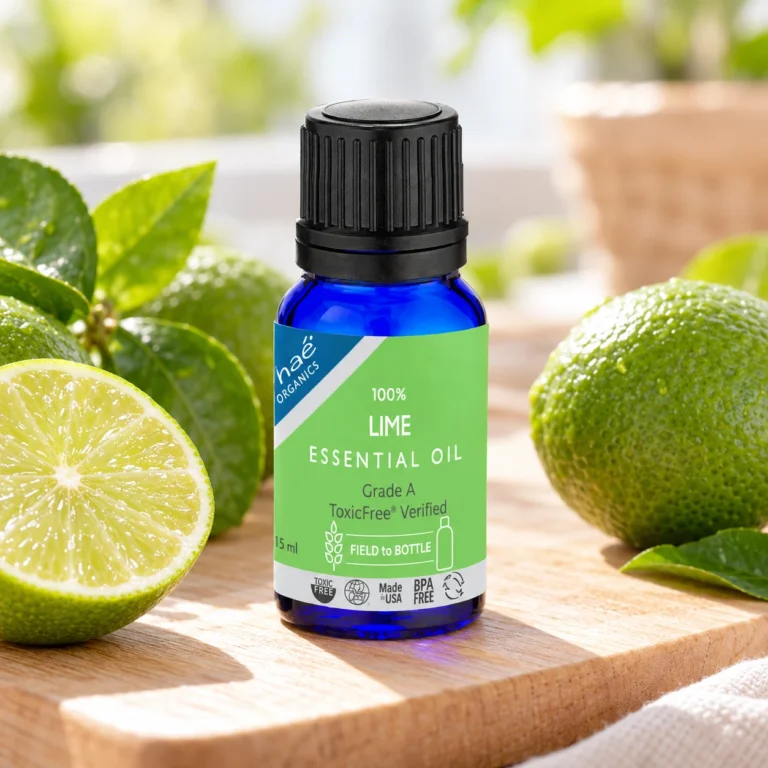
Lime oil is the zesty, green smell of a fresh-cut lime, with a sweet, sherbet-bright edge. Ours is a blend of cold-pressed…
Sign up for ToxicFree® tips, new arrivals and member-only offers. Your code arrives in your welcome email.

Sign in to check out faster, track orders and manage Subscribe & Save.