
Take Control of Your Health and Wellbeing with Essential Oils
Find out what essential oils are, how they work, and how they can help you get the results you want!
 Certified ToxicFree® · Cruelty-free · Made in Colorado
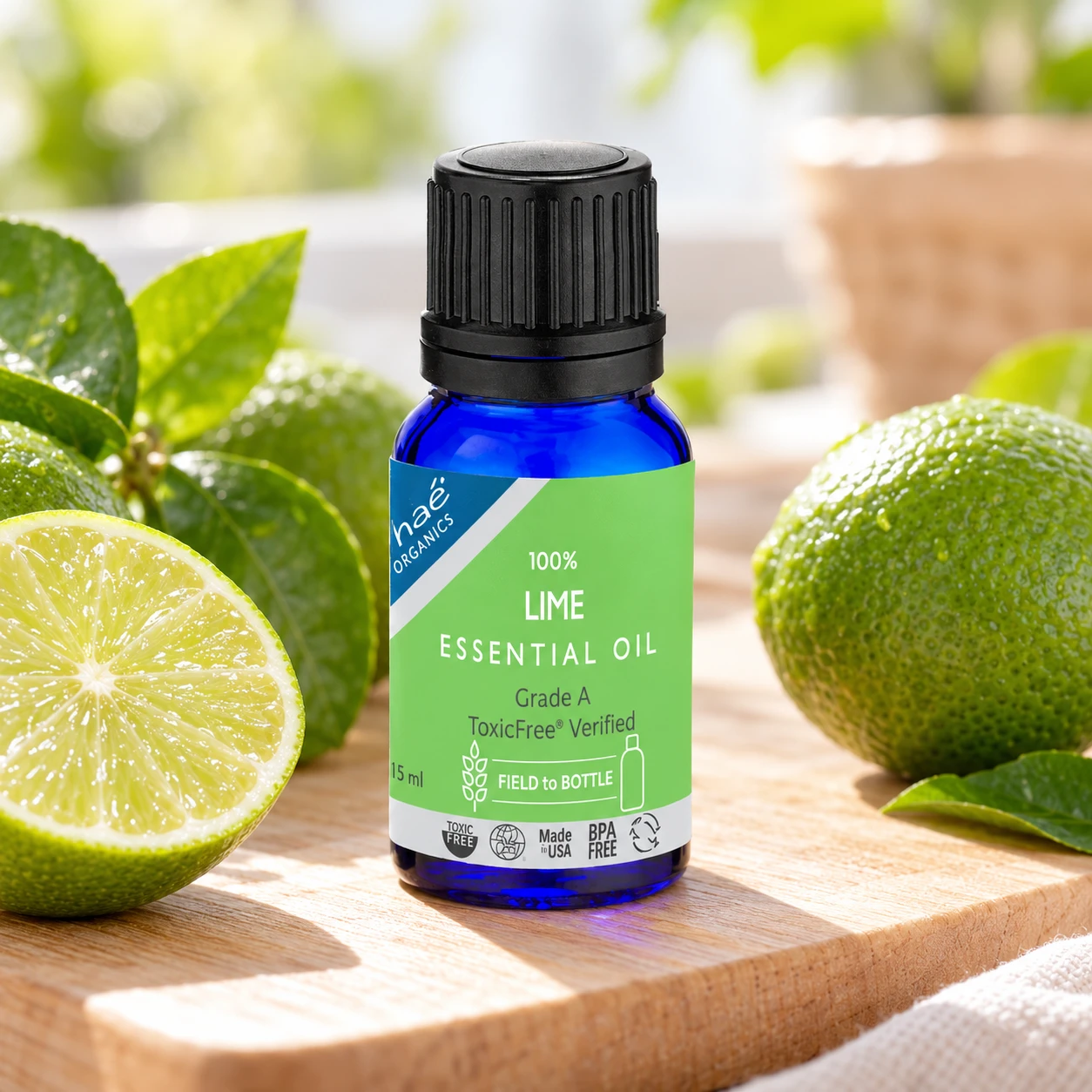
Lime oil is the zesty, green smell of a fresh-cut lime, with a sweet, sherbet-bright edge. Ours is a blend of cold-pressed and steam-distilled lime, and that matters in the sun. Here is why, the exact limit for skin, and how to use it.
Lime is the wake-up call of the citrus family: sharp, green and juicy, a little wilder than lemon. If you’ve squeezed one over tacos or into a glass of sparkling water, you know the smell.
Lime also has a reputation in the sun, and it has earned it. People who squeeze fresh limes outdoors on a sunny day sometimes end up with burns or brown streaks on their hands hours later. The compounds behind that are also in cold-pressed lime oil, which is why lime carries one of the strictest sun limits of any citrus oil.
The short version
Limes are thin-skinned green citrus, and like all citrus, their scent lives in tiny oil glands in the peel. Ours come from Key and Tahiti limes, carefully twisted from the tree with the button, the little cap where the stem meets the fruit, left attached. Pull the button off and the oil’s quality can suffer.

Our oil is made two ways and then combined, and the label says so. Part is cold-pressed from fresh lime peels, and part is steam-distilled from dried peels. Distilled lime generally smells sweeter and clearer, closer to lemon-lime soda, while cold-pressed lime is greener and more like a freshly cut fruit. Together they give a layered lime aroma in a light, olive-toned oil.
Citrus aurantifolia is the botanical name printed on our bottle; you will sometimes see it spelled aurantiifolia. On any lime oil, though, the line to read most carefully is the method, because with lime, that one word changes how you can use the oil on skin.
Cold-pressed lime is. Distilled lime isn’t. Pressing the peel carries over furocoumarins, including bergapten, compounds that react with UVA light on skin. Cold-pressed lime has enough of them to earn one of the lowest sun limits of any citrus oil, second only to bergamot among the common ones. Furocoumarins are too heavy to travel with steam in any real amount, so steam-distilled lime is considered non-phototoxic.
A phototoxic reaction doesn’t hurt at first. The skin can redden or blister hours after sun exposure, and patchy brown marks can last for weeks or months.
Our lime is a blend, and part of it is cold-pressed. Mixing in distilled oil dilutes the furocoumarins, but it doesn’t remove them, and the label doesn’t say how much of each is in the bottle. When the furocoumarin level isn’t known, IFRA, which sets the fragrance industry’s safety standards, says to apply the full limit for expressed lime oil. That’s what we suggest too. Our label puts it in plain words: keep it off skin that will be in the sun.
In Essential Oil Safety, Robert Tisserand and Rodney Young set a maximum of 0.7% for cold-pressed lime oil on skin that will be exposed to sunlight. IFRA uses the same 0.7% for leave-on products. That’s very little:
If you go above 0.7%, the Tisserand Institute’s advice is to keep that skin out of sunlight and UV for at least 12 hours, either by covering it completely or by staying indoors.
Lime is a sharp, juicy top note of fresh lime peel with a sweeter, sherbet-like edge: green, bright and lively. It has long been a favorite for mornings, when you want a room to feel awake.
A few diffuser blends to try, in drops for a standard water diffuser:
Start with 3 to 4 drops in the water reservoir, first thing in the morning. Phototoxicity is about oil left on skin, so diffusing doesn’t raise it. Diffuse for 30 to 60 minutes at a time rather than all day, in a room with some airflow.
For a zesty lime scent in the kitchen, mix in a 100 ml (about 3.4 oz) glass spray bottle:
Use glass: concentrated citrus oil can soften some plastics. Shake well before every spray, since oil and water separate, and test on a hidden spot before spraying fabric or finished surfaces. Think of it as a fresh scent for a clean counter: essential oils add scent, they don’t replace your cleaner.
A little lime goes a long way. For a fresh body oil, stir 4 drops lime into 30 ml (1 oz) of jojoba. That keeps lime under its 0.7% limit. Patch test on your inner arm first, keep it away from your eyes, and, as our label says, use it only on skin that won’t see the sun.
Search “lime oil benefits” and you will find long lists, from energy and digestion to skin. Much of that comes from lab studies or traditional use, not from a diffuser at home. In the U.S., an oil sold to treat a health problem is regulated as a drug; ours is sold for its scent, and we don’t make health claims for it. If you are managing a health condition, talk with your doctor.
A few things on the label tell you a lot:
Lime is the liveliest of the citrus oils, perfect for mornings and kitchens. Because ours includes cold-pressed oil, treat it as phototoxic: 0.7% or less on skin that will see the sun, or 12 hours covered up. Diffuse it freely, keep it fresh, and any room will smell like a just-cut lime.
Cold-pressed lime oil is, with a strict limit: 0.7% on skin that will see the sun, about 4 drops in 30 ml (1 oz), per Tisserand and Young and IFRA. Steam-distilled lime isn’t considered phototoxic.
Because part of it is cold-pressed. Blending dilutes the furocoumarins but doesn’t remove them, and when the level isn’t known, the full cold-pressed limit applies.
If you’ve used more than 0.7% on skin, keep that skin out of sunlight and UV, including tanning beds, for at least 12 hours, by covering it or staying indoors.
Be careful. The ASPCA lists lime as toxic to cats and dogs because of its essential oils and psoralens. Diffuse only briefly in a ventilated room your pet can leave, and never apply oils to a pet.
Counting from the day you open it, about 6 to 12 months at room temperature, or 1 to 2 years tightly capped in the fridge. If it smells flat or “off”, replace it.
Every Chaé essential oil is 100% pure, Grade A, Certified ToxicFree® and Leaping Bunny certified, with the plant named on the label. Start with lime, then build a blend.

Zesty, green lime with a sweet edge—the wakeful scent of an early summer morning.
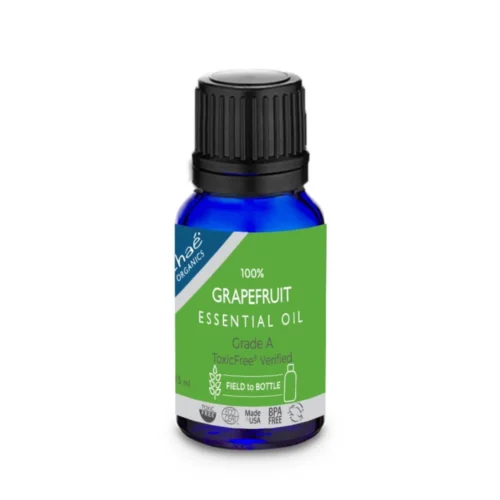
Juicy, bittersweet grapefruit with a tangy snap—an instant afternoon refresh.
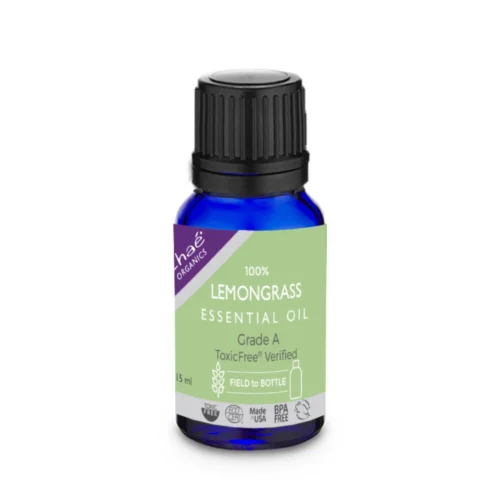
Savory, invigorating lemongrass from young leaves harvested on sunny days.
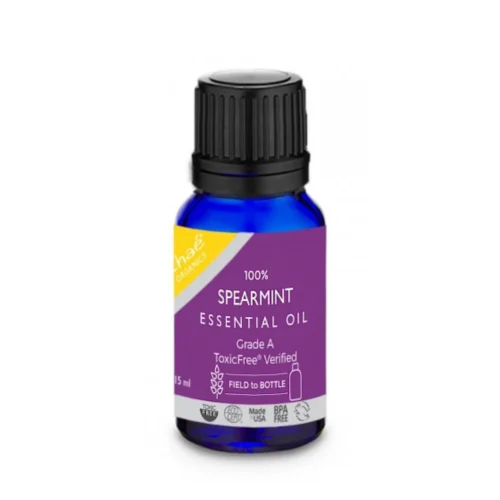
The sweet, easygoing mint: soft, rounded spearmint that’s gentler than peppermint.
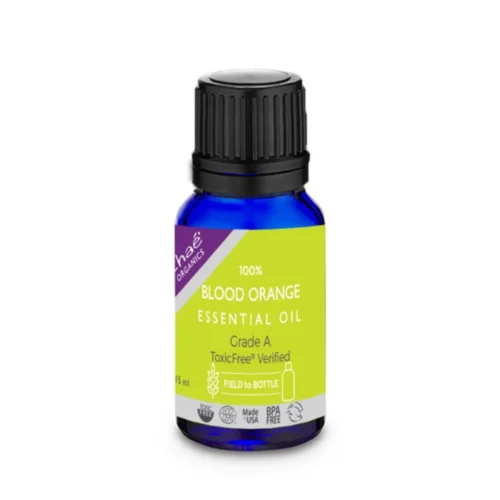
Sweet, tangy and juicy—blood orange brings a sunny, mellow mood to any room.
Find out what essential oils are, how they work, and how they can help you get the results you want!
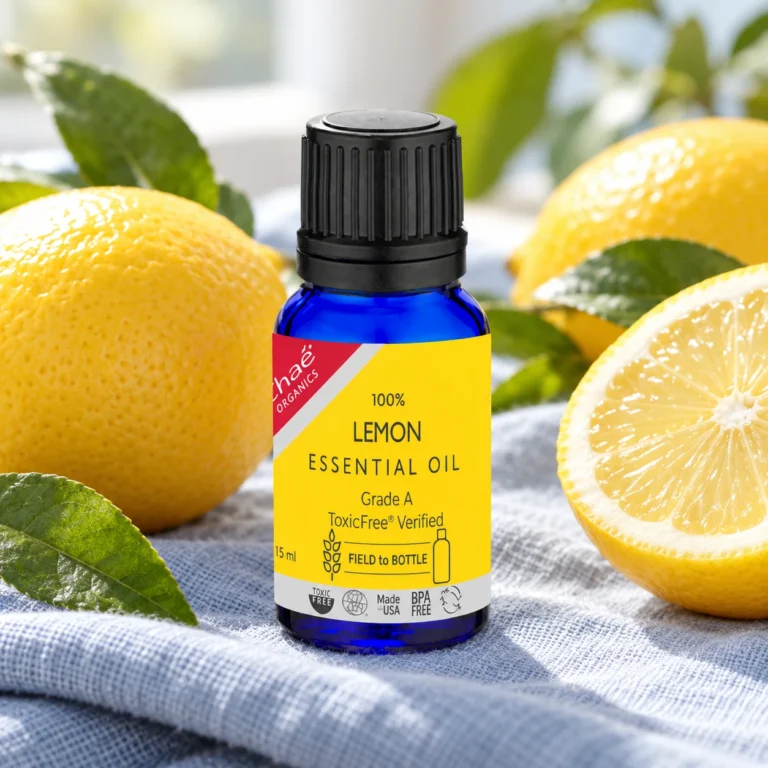
Lemon oil smells exactly like zesting a fresh lemon: sharp, clean and sunny. It can also react with sunlight on skin, depending…
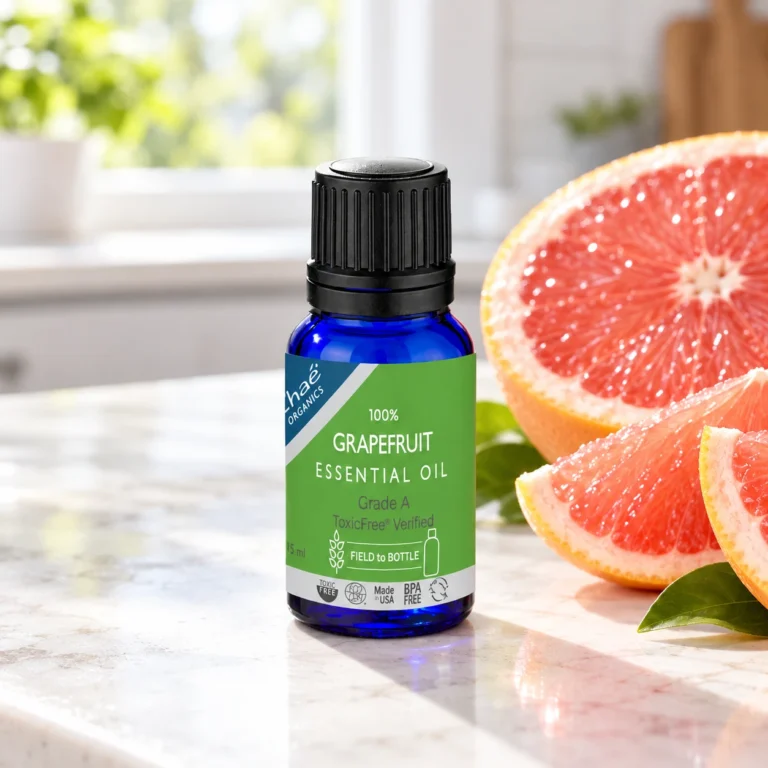
Grapefruit oil smells like the first cut into a cold grapefruit: juicy, bittersweet and wide awake. It is also mildly phototoxic. Here…
Sign up for ToxicFree® tips, new arrivals and member-only offers. Your code arrives in your welcome email.

Sign in to check out faster, track orders and manage Subscribe & Save.