
Take Control of Your Health and Wellbeing with Essential Oils
Find out what essential oils are, how they work, and how they can help you get the results you want!
 Certified ToxicFree® · Cruelty-free · Made in Colorado
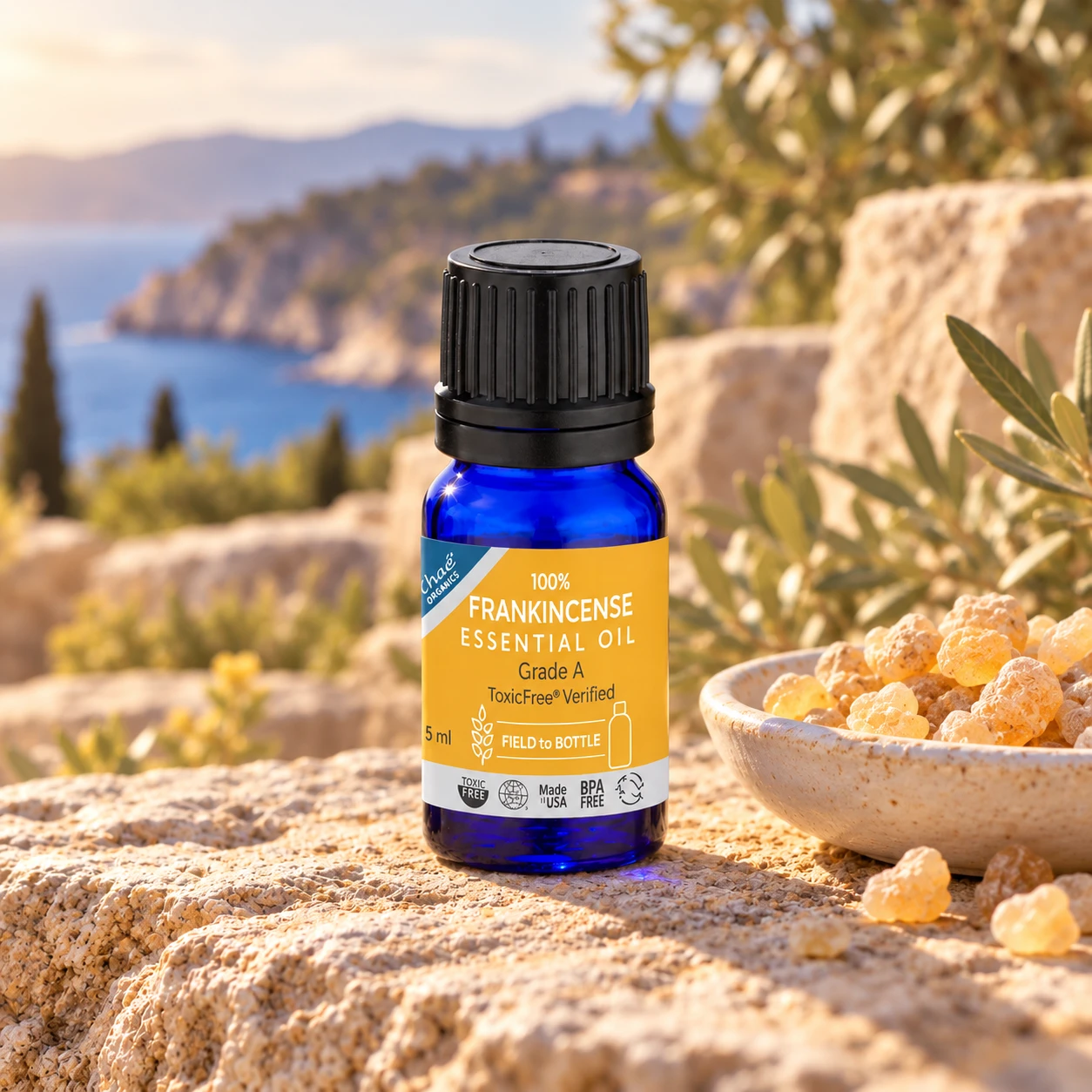
Frankincense has been burned in temples and homes for thousands of years. The essential oil brings that warm, resinous scent into a diffuser without the smoke. Here is what it is, how to use it, and how to use it safely.
Most essential oils come from leaves, flowers or peel. Frankincense comes from a cut in a tree. Harvesters score the bark of a Boswellia tree, a milky sap seeps out, and over a couple of weeks it hardens in the dry air into pale, glassy lumps called tears. Those tears are the frankincense of history, and they are what the essential oil is distilled from.
The oil smells nothing like a flower. It is spicy, earthy and a little lemony, with a fresh, pine-like lift over a warm, resinous base. It is the scent many people reach for when they want a room to feel quiet.
The short version
Frankincense comes from Boswellia, a small group of tough, papery-barked trees that grow in the dry, rocky hills of the Horn of Africa and the southern Arabian Peninsula. They grow where little else will, on cliffs and in thin soil, and some stand leafless for part of the year, waiting out the drought.

The tears are gathered by hand and sorted by size and color. To make the essential oil, the resin is distilled: heat carries its lighter aromatic molecules away as vapor, and as the vapor cools they collect as oil. Everything heavy, including the gummy part of the resin, stays behind.
Ours is distilled from fine-grade Boswellia carterii resin, harvested under fair-trade practices from a Somaliland source with better traceability, and every lot of resin is inspected in the U.S. Good resin has a bright, silvery yellow-brown tone. Darker, flecked or solvent-cut resin, which is behind a lot of today’s frankincense, makes a duller oil.

There are several kinds of frankincense, and they don’t smell alike. Boswellia carterii, the name on our bottle, is the classic frankincense of Somalia. Many botanists now treat it as the same species as Boswellia sacra, the frankincense of Oman, so you will see both names. Other oils come from Boswellia frereana, serrata or papyrifera, and each has its own scent. Whatever you buy, the label should name the species. “Frankincense oil” on its own doesn’t tell you which tree it came from.
No. Frankincense oil isn’t phototoxic. Phototoxic oils contain furocoumarins, compounds that react with sunlight on the skin and can cause redness, blistering or dark patches that last for months. They show up mainly in cold-pressed citrus oils such as bergamot, lime and bitter orange, which is why those carry real sun limits. Frankincense doesn’t contain them.
The sun note on our product pages is a general caution we give for every oil. Frankincense itself isn’t known to cause sun reactions.
We don’t recommend it. “Neat” means straight from the bottle onto skin, and you will find a lot of advice online to do exactly that with frankincense. Fresh frankincense is one of the gentler oils, but there is a catch: the α-pinene and limonene that give it its bright top note react with air over time. As the oil oxidizes, it becomes much more likely to irritate skin or trigger an allergy, and once your skin is sensitized, it can react every time you use the oil.
Diluting keeps the dose low, and that’s what protects you from a reaction you can’t undo. For the body, about 1 to 2% is plenty: 6 to 12 drops in 30 ml (1 oz) of a carrier oil such as jojoba or sweet almond. Use half that on the face, keep it away from the eyes, and try a small patch on your inner arm first.
Frankincense is spicy and earthy, slightly fruity, with a fresh, lemony-pine lift over warm, resinous depth. It is the backbone of a lot of incense, and in a diffuser it does something useful: bright oils like citrus fade fast on their own, and frankincense gives them something to hold on to.
A few diffuser blends to try, in drops for a standard water diffuser:
Start with 3 to 5 drops in the water reservoir. Frankincense is a natural fit for meditation, yoga, prayer or a slow start to the day: it gives you the scent of burning resin without smoke in the room. Diffuse for 30 to 60 minutes at a time rather than all day, in a room with some airflow.
Frankincense makes a warm, quiet personal scent that suits anyone. For a body oil, stir 6 drops into 30 ml (1 oz) of jojoba. For a roll-on, add 4 drops to a 10 ml roller bottle and top it up with jojoba, which works out to about 2%. Apply to the wrists or the back of the neck, not the face.
For a soft, incense-like scent in a living room or entryway, mix in a 100 ml (about 3.4 oz) glass spray bottle:
Shake well before every spray, since oil and water separate. Mist into the air rather than onto people or pets, and test on a hidden spot before spraying fabric.
Frankincense attracts some of the biggest claims on the internet. Much of the research behind them is on boswellic acids, compounds in the resin that are studied in extracts and supplements. Boswellic acids are far too heavy to come through in distillation, so they aren’t in the essential oil in any meaningful amount. In the U.S., an oil sold to treat a health problem is regulated as a drug; ours is sold for its scent, and we don’t make health claims for it. If you are managing a health condition, talk with your doctor.
Frankincense is one of the gentler oils, but gentle is not the same as harmless. A few simple habits keep it pleasant:
A few things on the label tell you a lot:
Frankincense is the quiet oil: warm, resinous and calming to be around, and one of the best partners for bright citrus in a blend. It isn’t phototoxic, but it isn’t for neat use either. Dilute it, keep the bottle fresh and tightly capped, and it will give you the feel of temple incense without any smoke.
No. Frankincense doesn’t contain furocoumarins, the compounds that make some citrus oils phototoxic, so it won’t make skin burn more easily in the sun.
We don’t recommend it. Oxidized frankincense can irritate or sensitize skin, and a sensitized reaction can come back every time you use it. Dilute to about 1 to 2% for the body, half that for the face.
Spicy and earthy, slightly fruity, with a fresh, lemony-pine top over warm, resinous depth. Think of incense without the smoke.
Many botanists now treat them as the same species: carterii is the name long used for Somali frankincense, sacra for the frankincense of Oman. Our label says Boswellia carterii.
Be careful, especially with cats. Diffuse only briefly, in a ventilated room your pet can leave, and never apply oils to a pet. Ask your vet if your pet has breathing problems.
Kept tightly capped, cool and out of the light, about one to two years after opening. If it smells sharp or like turpentine, it has oxidized and it’s time for a fresh bottle.
Every Chaé essential oil is 100% pure, Grade A, Certified ToxicFree® and Leaping Bunny certified, with the plant named on the label. Start with frankincense, then add a bright partner.
Traceable, fair-trade frankincense with a spicy, earthy warmth and a hint of fruit.
Fresh Italian citrus with a sweet, peppery heart—the refined note behind classic colognes.
Sweet, tangy and juicy—blood orange brings a sunny, mellow mood to any room.
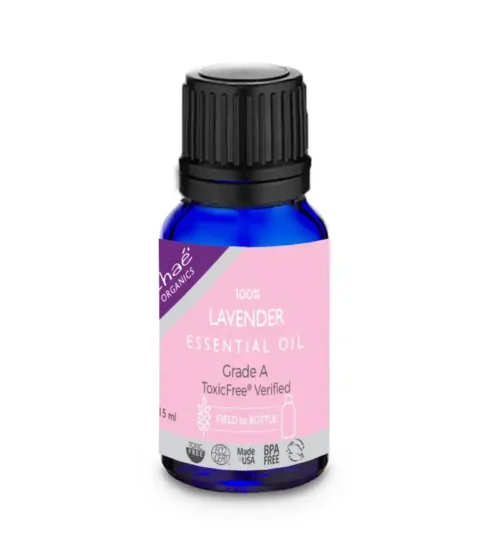
Sweet, herbal lavender from the first blooms of the season—made for slow evenings.
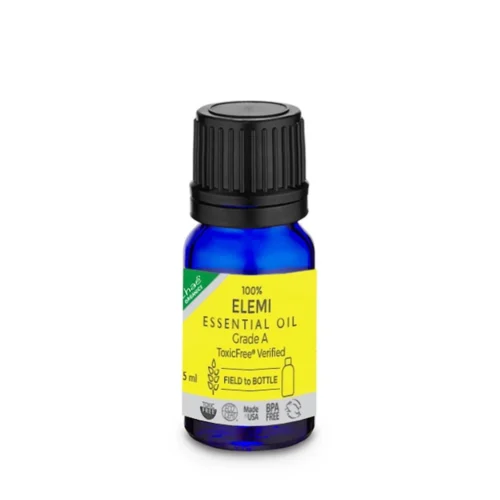
A soft, balsamic resin with a lemony, peppery lift—light, clear and quietly centering.
Find out what essential oils are, how they work, and how they can help you get the results you want!
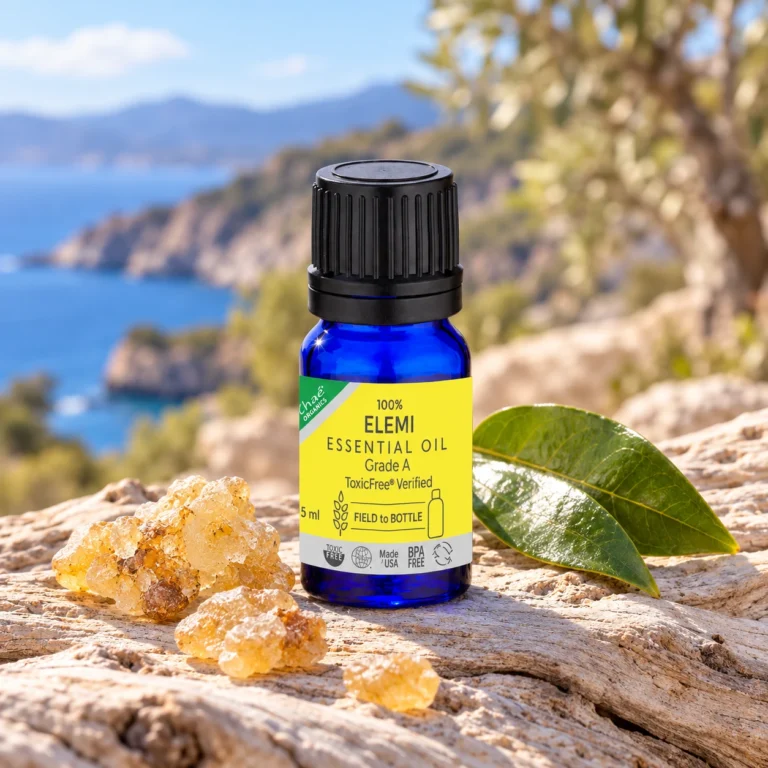
What is elemi essential oil? A bright, lemony resin oil, frankincense's lighter cousin. How it smells, blends to try, how much to…
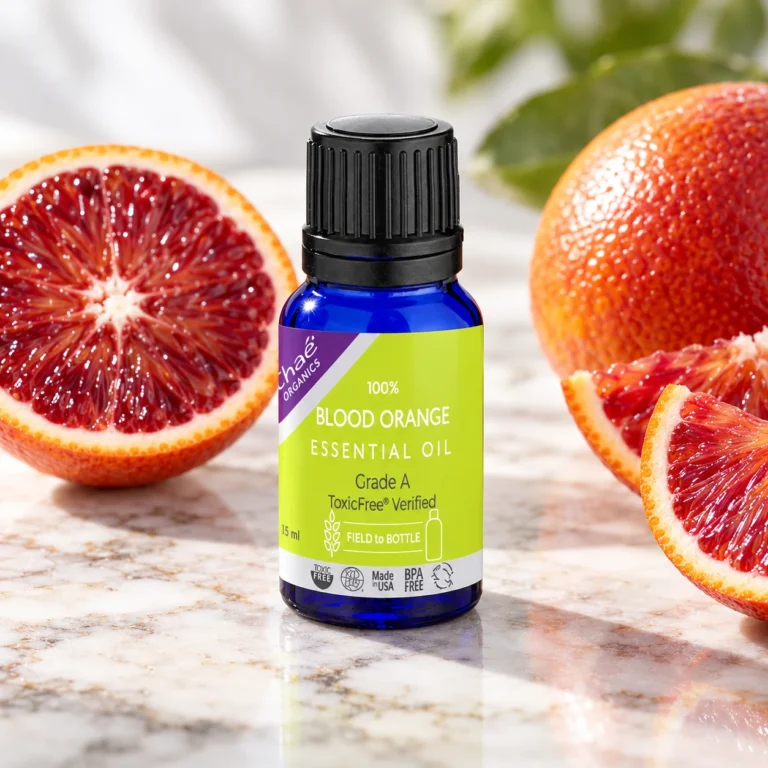
Blood orange essential oil properties, whether it's phototoxic (unlike bitter orange), diffuser blends with cinnamon, and a homemade room spray.
Sign up for ToxicFree® tips, new arrivals and member-only offers. Your code arrives in your welcome email.

Sign in to check out faster, track orders and manage Subscribe & Save.