
Take Control of Your Health and Wellbeing with Essential Oils
Find out what essential oils are, how they work, and how they can help you get the results you want!
 Certified ToxicFree® · Cruelty-free · Made in Colorado
Elemi is the bright, easygoing cousin of frankincense: a resin oil that smells soft, lemony and peppery instead of deep and smoky. Here is what elemi is, how it compares with frankincense, what it blends with, and how to use it safely.
Most people have never heard of elemi, yet perfumers, soap makers and incense makers have kept it on the shelf for generations. It is a resin oil, like frankincense and myrrh, but it wears its resin lightly. Where frankincense is deep and smoky, elemi is clear and bright, with a lemony, peppery lift over a soft, balsamic base.
That makes it one of the easiest resin oils to live with: calm without heaviness, and happy next to citrus, lavender and frankincense. If you love the idea of incense but find it heavy, elemi is the one to try.
The short version
Elemi is a resin oil. It doesn’t come from leaves, flowers or peel, but from what a tree makes inside its bark. Elemi trees store a fragrant oleoresin, part resin and part essential oil, in channels inside the bark. When tappers cut strips of bark, the oleoresin seeps out soft and pale, and as it sits it firms up, turning waxy and honey-gold.

Ours is tapped in the rainy season, the wettest time of the year, when carefully tended trees give their greatest flow of oleoresin. The oleoresin is then steam-distilled: steam carries away its lighter aromatic molecules, and as the vapor cools they collect as oil. The heavy, sticky resin stays behind. What ends up in the bottle is the fresh, bright part of elemi’s scent, without the stickiness.
“Elemi” is an old trade name, and over the years it has been used for resins from more than one tree. Canarium commune, the name on our bottle, is the tree the British Pharmaceutical Codex of 1911 gave as the source of elemi, which then reached Britain mostly from Manila. Botanists have reshuffled Canarium names since, so you will see more than one on elemi labels. The “gum oil” in our ingredient name simply means the oil comes from the tree’s gum, its oleoresin. Whatever you buy, check that the label names a Canarium species. “Elemi fragrance” on its own tells you very little.
Elemi and frankincense are relatives: both come from trees in the torchwood family, Burseraceae, and both are distilled from what the trees make in their bark. But they play different roles in a blend.
| Elemi | Frankincense | |
|---|---|---|
| The tree | Canarium (ours: Canarium commune) | Boswellia (ours: Boswellia carterii) |
| What’s distilled | Soft oleoresin tapped from cut bark | Resin that hardens into “tears” on the bark |
| Scent | Soft, light, balsamic; lemony, peppery, caraway-like | Spicy, earthy, lemony-pine over warm, resinous depth |
| In a blend | Brightens and lifts | Grounds and deepens |
| Good choice if… | You love incense but want something lighter and fresher | You want the classic, quiet scent of temple incense |
You don’t have to choose. A drop of each together makes a “two resins” blend that is brighter than frankincense alone and deeper than elemi alone. There’s more on frankincense in our frankincense guide.
Elemi is soft, light and balsamic, with a lemony, peppery lift, a caraway-like note and hints of incense and pine. The 1911 pharmacy codex said the resin’s smell recalled mace. In a blend it works as a bridge: it brightens frankincense, softens lavender and sits happily with citrus.
A few diffuser blends to try, in drops for a standard water diffuser:
Start with 3 to 5 drops in the water reservoir, alone or with frankincense for a clear, incense-like calm. Elemi suits quiet evenings, meditation, or any time you want a room to feel settled without feeling heavy. Diffuse for 30 to 60 minutes at a time rather than all day, in a room with some airflow.
Elemi makes a fresh, resinous note in a body oil. Stir 6 drops into 30 ml (1 oz) of jojoba or sweet almond oil, about 1%. For a balm, stir the same 6 drops into 30 ml (1 oz) of melted balm base as it cools.
Elemi is a classic soap and incense note. Add it along with any other essential oils, and follow the fragrance amount your soap base or recipe calls for.
For a soft, resinous scent in a living room or entryway, mix in a 100 ml (about 3.4 oz) glass spray bottle:
Shake well before every spray, since oil and water separate. Mist into the air rather than onto people or pets, and test on a hidden spot before spraying fabric.
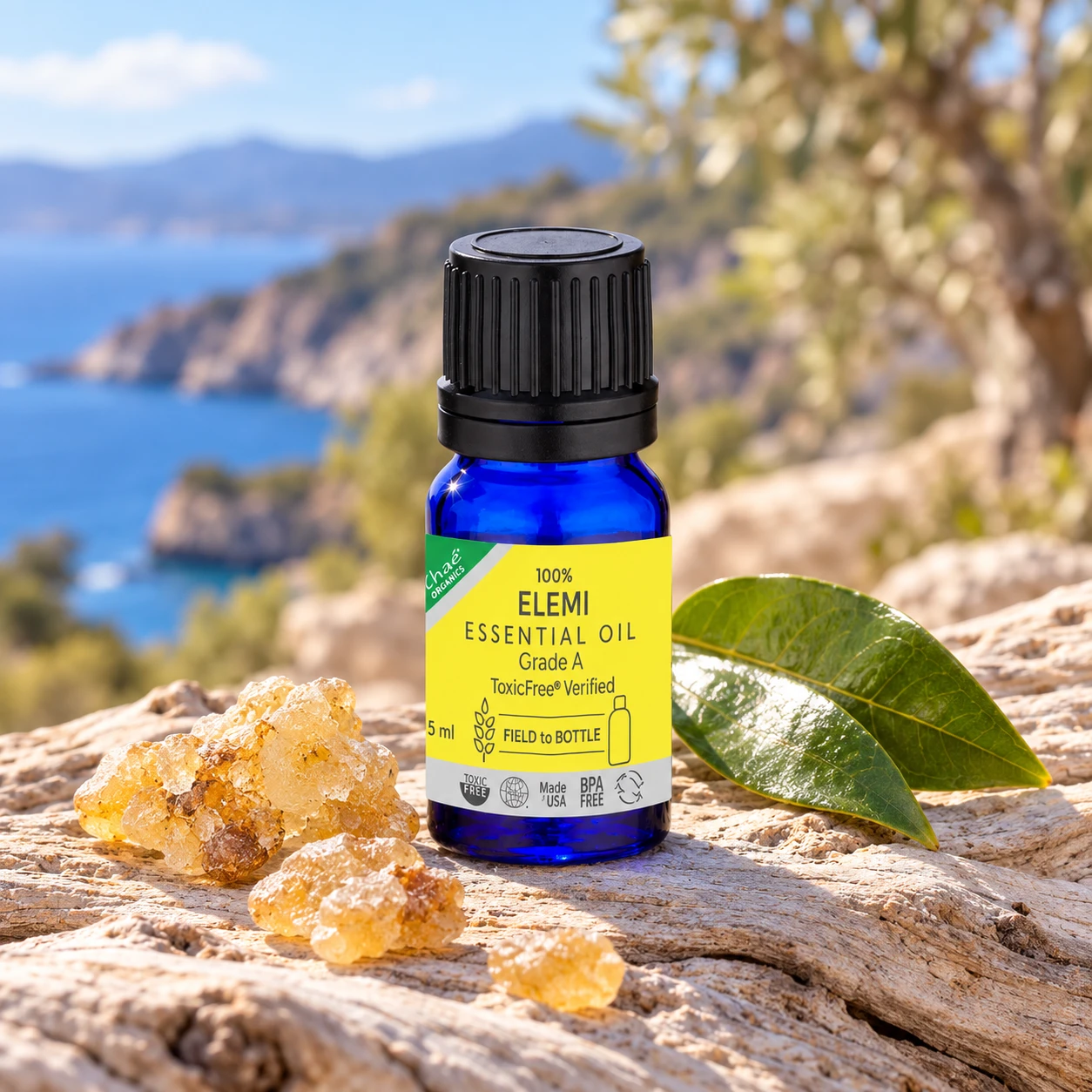
Only diluted. Like frankincense and many other oils with a fresh, lemony lift, elemi changes as it ages in air. Oxidized oils are much more likely to irritate skin or trigger an allergy, and once your skin is sensitized, it can react every time you use the oil.
For a body oil or balm, about 1% is a good everyday level: 6 drops in 30 ml (1 oz) of carrier. Use half that on the face, keep it away from the eyes, and try a small patch on your inner arm first. If you make products to sell, have your formula reviewed by a cosmetic safety assessor, who will work from the current IFRA Standards.
Search “elemi oil benefits” and you will find claims about skin, breathing and more. Some of it echoes old pharmacy books, which mixed elemi resin into ointments a century ago; much of the rest comes from lab studies, not from a diffuser at home. In the U.S., an oil sold to treat a health problem is regulated as a drug; ours is sold for its scent, and we don’t make health claims for it. If you are managing a health condition, talk with your doctor.
A few simple habits keep elemi pleasant:
A few things on the label tell you a lot:
Elemi is the light resin: soft, lemony and peppery, calm without heaviness, and the easiest way to brighten frankincense or give citrus some depth. It isn’t phototoxic, but it belongs diluted on skin, and like other fresh, bright oils it is best used while it’s fresh. Keep the cap tight, pair it with frankincense, lavender or lemon, and it will give a room the feel of incense with none of the weight.
A resin oil. It is steam-distilled from the fragrant oleoresin that seeps from cuts in the bark of the elemi tree. Our label names the tree Canarium commune.
Soft, light and balsamic, with a lemony, peppery lift, a caraway-like note and hints of incense and pine. Think of a brighter, fresher frankincense.
No. They are relatives in the same plant family, but they come from different trees. Elemi is lighter and more lemony; frankincense is deeper and more resinous. They blend well together.
About 1% is a good everyday level: 6 drops per 30 ml (1 oz) of carrier oil, half that for the face. Patch test first.
No. Elemi doesn’t contain furocoumarins, the compounds that make some citrus oils phototoxic, so it won’t make skin burn more easily in the sun.
Kept tightly capped, cool and out of the light, about one to two years after opening. If it smells sharp or like turpentine, it has oxidized and it’s time for a fresh bottle.
Every Chaé essential oil is 100% pure, Grade A, Certified ToxicFree® and Leaping Bunny certified, with the plant named on the label. Start with elemi, then pair it with frankincense.
A soft, balsamic resin with a lemony, peppery lift—light, clear and quietly centering.
Traceable, fair-trade frankincense with a spicy, earthy warmth and a hint of fruit.

Sweet, herbal lavender from the first blooms of the season—made for slow evenings.
Sharp, sparkling lemon zest—sunshine in a bottle for your mood and your home.

Fresh Italian citrus with a sweet, peppery heart—the refined note behind classic colognes.

Find out what essential oils are, how they work, and how they can help you get the results you want!
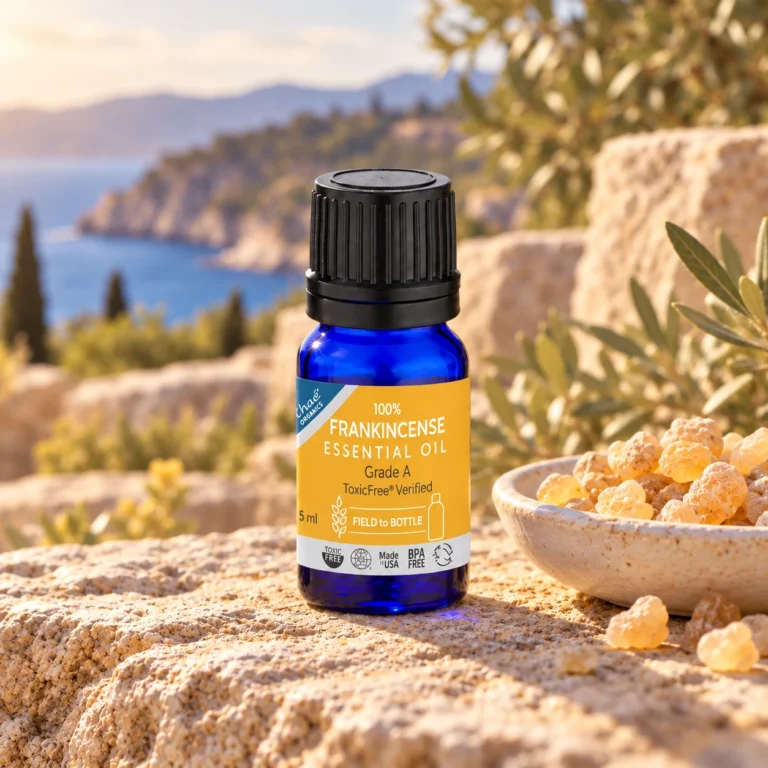
What frankincense essential oil is, how it is made from resin, diffuser blends, how to dilute it, and whether it is photosensitive…
Birch essential oil: its clean, woody scent, diffuser blends, and why birch carries strong cautions for kids, pregnancy, cats and anyone on…
Sign up for ToxicFree® tips, new arrivals and member-only offers. Your code arrives in your welcome email.

Sign in to check out faster, track orders and manage Subscribe & Save.