
Take Control of Your Health and Wellbeing with Essential Oils
Find out what essential oils are, how they work, and how they can help you get the results you want!
 Certified ToxicFree® · Cruelty-free · Made in Colorado
Thyme essential oil is bold, warm and herbal, the smell of a sunny Mediterranean hillside. Here is what it’s used for, why “thyme oil” can mean several quite different oils, and how to use it safely.
Brush your hand over a pot of garden thyme and the scent stays on your fingers: warm, peppery and green. Thyme essential oil is that scent, concentrated many times over. A single drop is enough to change the smell of a room.
Thyme is also one of the more complicated oils on the shelf. The same plant can make several chemically different oils, and they are not equally gentle. Knowing that is the key to using thyme well.
The short version
Mostly for its scent, in a few places:
Common thyme is a low, woody, strongly aromatic herb with small curved leaves and tiny white or lilac flowers in summer. It grows wild on dry, stony hillsides around the Mediterranean, and it has been prized since classical times. In one old tradition, knights were given thyme for courage before battle.

Ours is grown only in thyme’s native southern Europe and Mediterranean regions, in the dry, stony soil it likes best. The leaves and flowering tops are partially dried, then water- or steam-distilled: steam carries the plant’s aromatic oil away, and the oil separates from the water as it cools.
Most plants make roughly the same oil wherever they grow. Thyme doesn’t. Plants of Thymus vulgaris that look identical can make oils built around completely different molecules. These chemical types are called chemotypes, often shortened to “ct.” on a label. One 2016 study that compared more than 80 thyme oils sorted them into 20 chemotypes.
For everyday use, they fall into two groups:
| Thymol and carvacrol types | Linalool, geraniol and thujanol types | |
|---|---|---|
| Main molecules | Thymol or carvacrol, both phenols | Linalool, geraniol or thujanol, which are alcohols |
| Scent | Warm, sharp and strongly herbal, the classic thyme smell | Softer and sweeter, sometimes floral |
| On skin | Stronger: tighter skin limits, and can irritate the nose and throat | Much gentler |
| Label may say | “ct. thymol” or “ct. carvacrol” | “ct. linalool”, “ct. geraniol” or “ct. thujanol” |
Tisserand and Young, the standard reference on essential oil safety, set a skin maximum of 1.3% for thymol-type thyme oil and rate it a moderate risk for irritating mucous membranes, such as the inside of the nose.
Our label names the plant, Thymus vulgaris, but not a chemotype. When a thyme oil doesn’t name its chemotype, the careful choice is to treat it like the strongest kind. That is the guidance we give below, and it matches our own directions: only ever highly diluted.
Our thyme is complex and wonderfully strong: warm and herbaceous, both sweet and bitter, with a hint of mint and pepper. On its own it is bracing. A drop of citrus or lavender softens it beautifully.
Use one drop of thyme and let the other oils carry the blend. A few diffuser blends to try, in drops for a standard water diffuser:
Start with a single drop, two at most. Diffuse for about 30 minutes at a time, in a room with some airflow, and stop if anyone’s nose or throat feels irritated.
Add one or two drops to a bowl of dried herbs, flowers or pinecones, and refresh it every week or so. Keep the bowl out of reach of children and pets.
For a warm herbal note while you wipe down counters, mix in a 100 ml (about 3.4 oz) glass spray bottle:
Shake well before every spray, since oil and water separate. Test on a hidden spot first and keep the spray away from eyes, people and pets. Essential oils add scent; they don’t replace your cleaner.
Never apply thyme undiluted. Because our label doesn’t name a chemotype, we suggest staying under the thymol-type limit with room to spare: about 0.5 to 1%, which is 3 to 6 drops in 30 ml (1 oz) of a carrier oil such as jojoba or sweet almond. In a 10 ml roller bottle, 1 drop is about 0.5%. Keep it off the face, out of the bath, and away from broken skin, and patch test on your inner arm first.
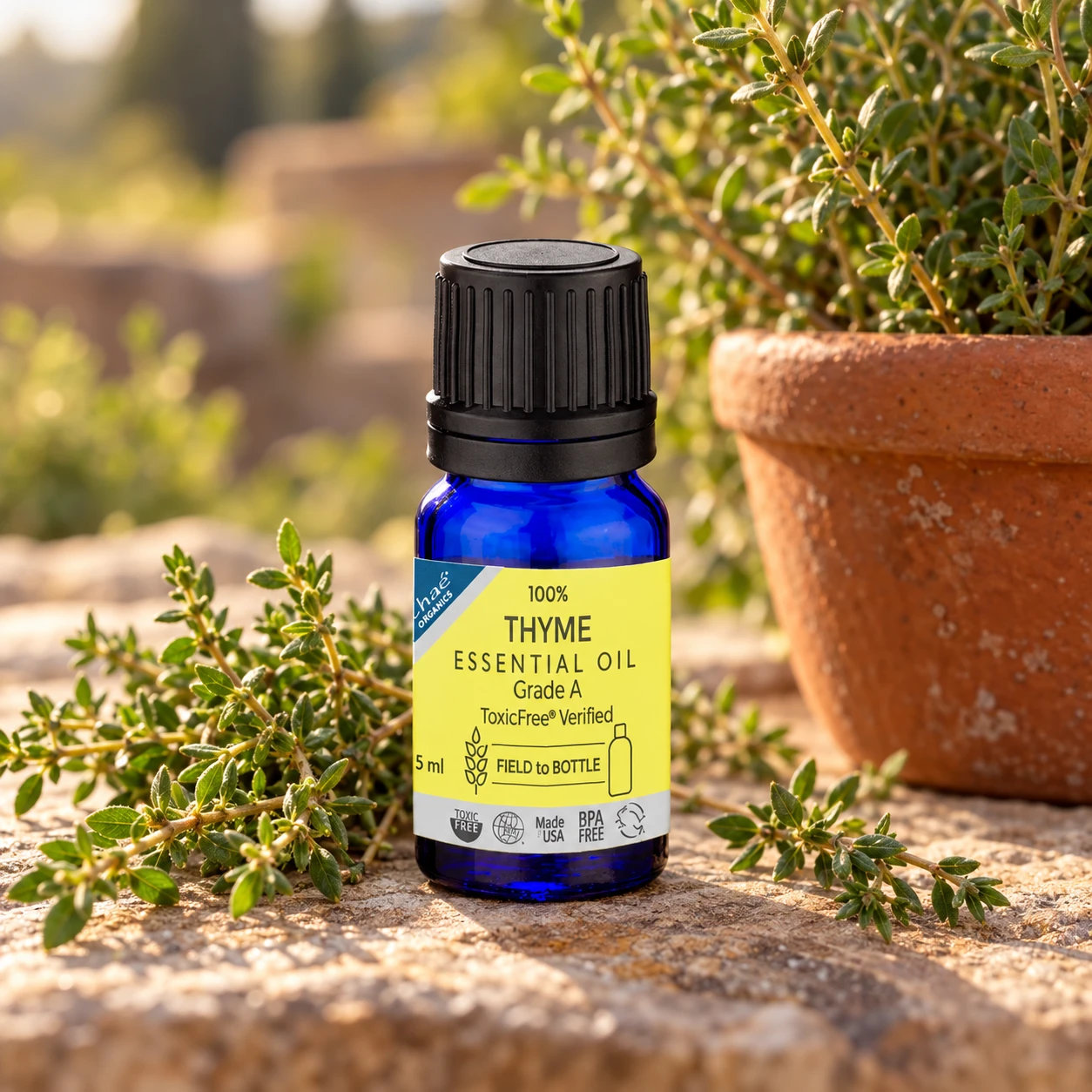
Search “properties of thyme essential oil” and you will find long lists of claims about germs, coughs, skin and more. Much of that comes from lab studies of thyme oil or its molecules, not from a diffuser at home. In the U.S., an oil sold to treat a health problem is regulated as a drug; ours is sold for its scent, and we don’t make health claims for it. If you are managing a health condition, talk with your doctor.
Thyme is a strong oil, and a few simple habits keep it pleasant:
A few things on the label tell you a lot:
Thyme is the bold herb of the essential oil shelf: warm, peppery and bracing, at its best as a single drop in a diffuser blend, a bowl of potpourri or a kitchen spray. Thyme oils vary by chemotype, so treat ours as the strong kind: under 1% on skin, never on the face, and never in the bath. Soften it with lemon or lavender, and a little will go a long way.
Mostly for scent: a drop or two in a diffuser blend, a few drops in potpourri or a homemade kitchen spray, and as a fragrance in cosmetics. On skin, use it only highly diluted.
A chemical type. Thyme plants of the same species can make oils built around different molecules, such as thymol, carvacrol, linalool or geraniol. Thymol and carvacrol types are much stronger on skin than linalool types.
Our label names the plant, Thymus vulgaris, but not a chemotype, so we recommend treating it like the strongest kind: no more than 1% on skin, and off the face.
No. Dilute it to about 0.5 to 1% (3 to 6 drops per 30 ml of carrier oil), keep it off the face and out of the bath, and patch test first.
Be careful. Use a drop or two, diffuse only briefly in a ventilated room your cat can leave, and never apply oils to a pet. Ask your vet if your pet has breathing problems.
Kept tightly capped, cool and out of the light, about two to three years. If it smells flat or “off”, it is time for a fresh bottle.
Every Chaé essential oil is 100% pure, Grade A, Certified ToxicFree® and Leaping Bunny certified, with the plant named on the label. Start with thyme, then soften it with a partner.
Bold, sweet-bitter thyme from the Mediterranean — a warm, bracing herbal scent with a hint of pepper.
Sharp, sparkling lemon zest—sunshine in a bottle for your mood and your home.
Sweet, herbal lavender from the first blooms of the season—made for slow evenings.

Step into a Mediterranean cypress grove: earthy, woody and faintly citrusy.
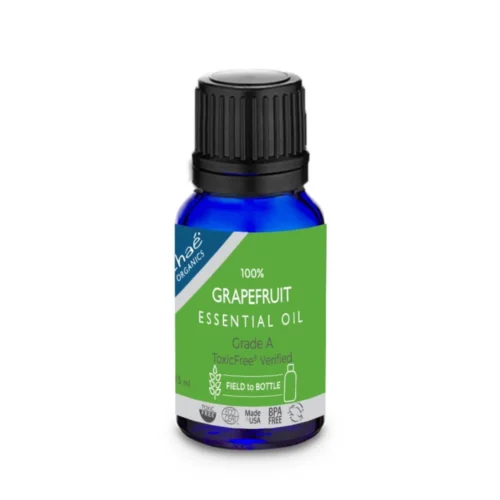
Juicy, bittersweet grapefruit with a tangy snap—an instant afternoon refresh.
Find out what essential oils are, how they work, and how they can help you get the results you want!
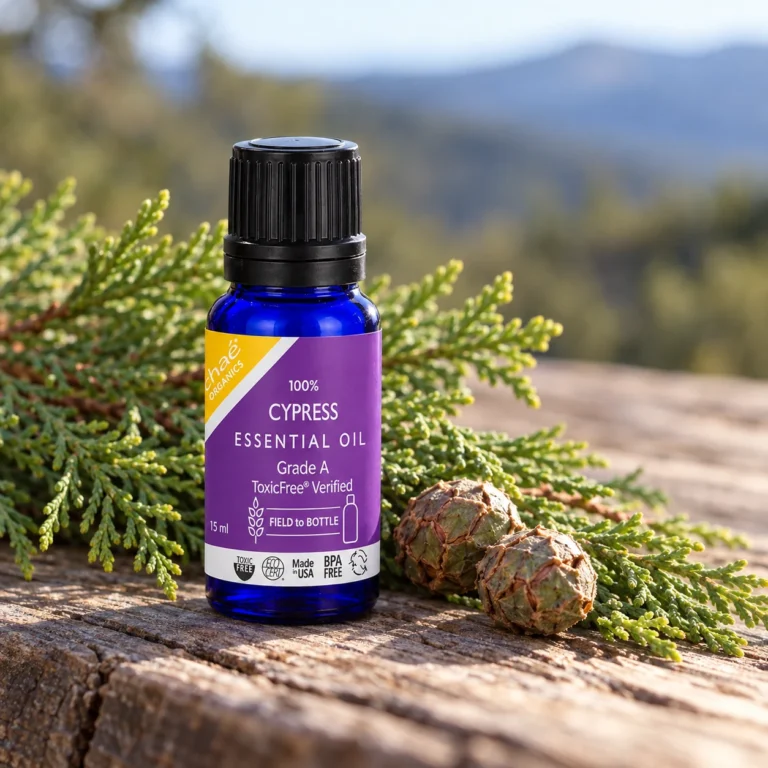
What cypress essential oil is, how it smells, diffuser blends and an easy room spray, how to dilute it, and whether it…
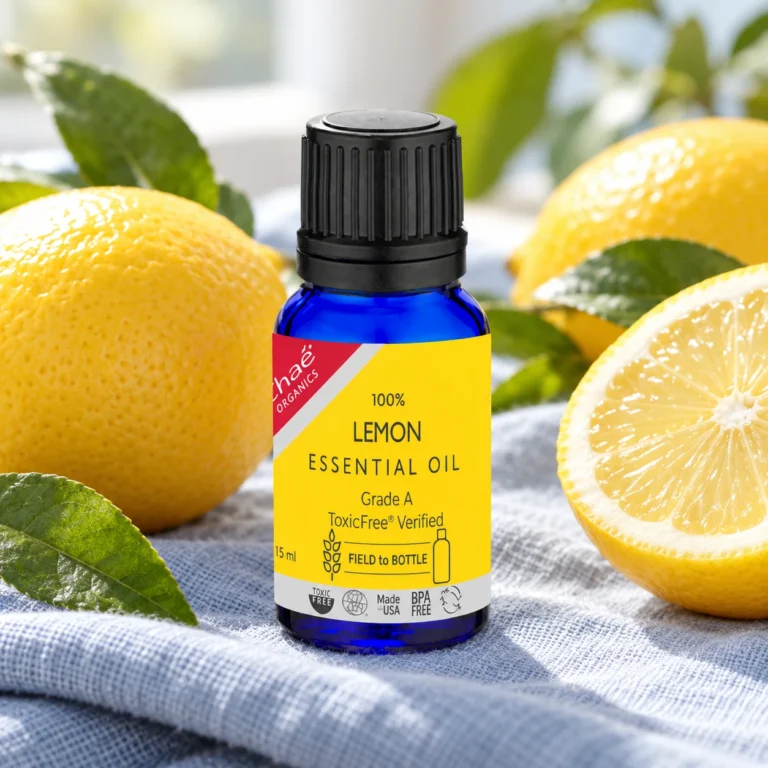
Lemon oil smells exactly like zesting a fresh lemon: sharp, clean and sunny. It can also react with sunlight on skin, depending…
Sign up for ToxicFree® tips, new arrivals and member-only offers. Your code arrives in your welcome email.

Sign in to check out faster, track orders and manage Subscribe & Save.