
Take Control of Your Health and Wellbeing with Essential Oils
Find out what essential oils are, how they work, and how they can help you get the results you want!
 Certified ToxicFree® · Cruelty-free · Made in Colorado
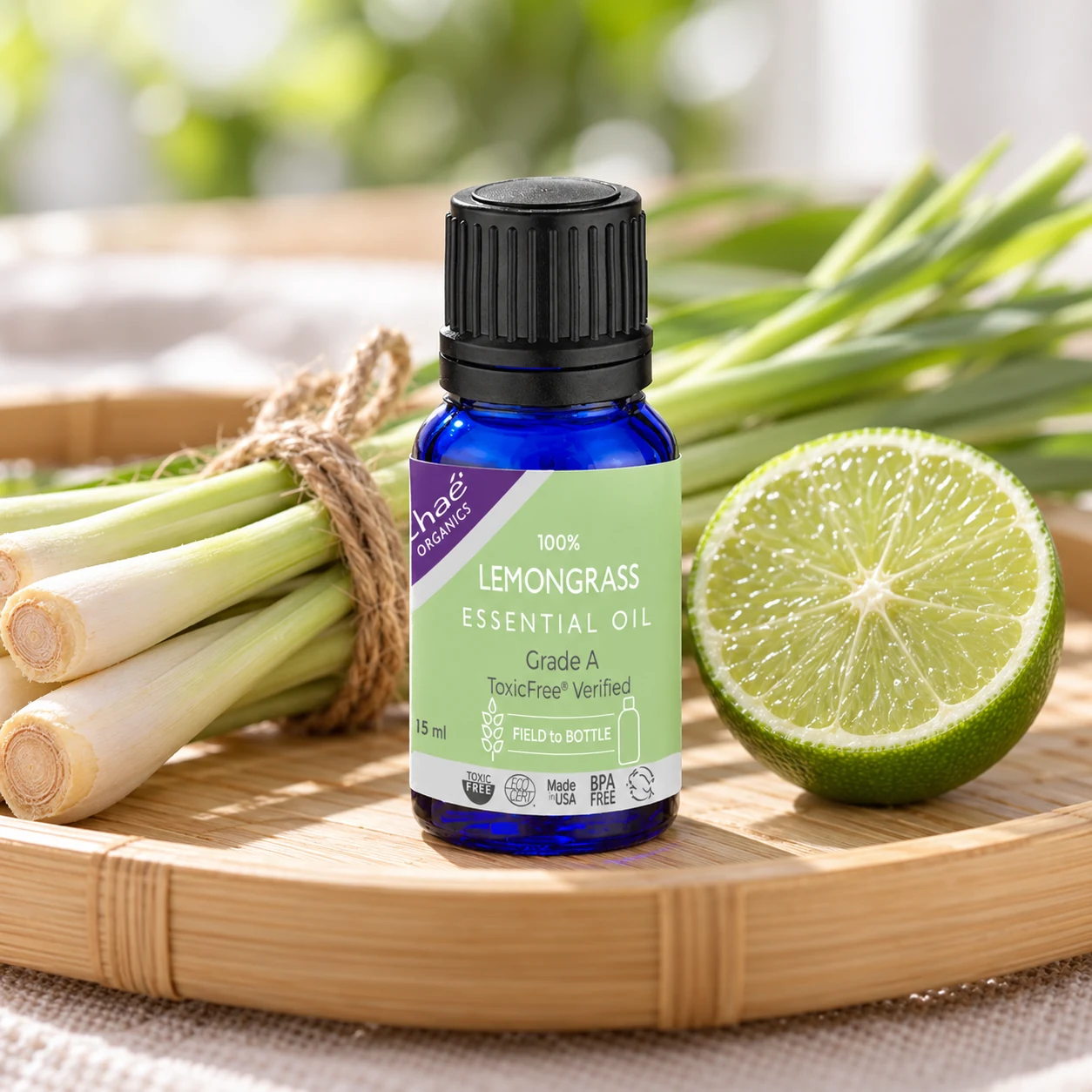
Lemongrass is one of the boldest scents in the essential oil cabinet: grassy, savory and wide awake. Here is what lemongrass essential oil is, what it’s used for, what it blends with, and how to use it safely on skin.
You may know lemongrass from the kitchen, where its pale, woody stalks get bruised and dropped into soups and curries. The essential oil comes from a different part of the plant: the long, arching leaves, which hold the plant’s purest oil in their tips.
Open a bottle and the scent fills the room fast: fresh and grassy with a savory edge, the kind of smell that makes a kitchen feel clean. It is also one of the oils that asks for the most care on skin, and knowing the right dilution is most of what you need to enjoy it.
The short version
Lemongrass belongs to Cymbopogon, a group of tall, clumping tropical grasses with strongly scented leaves. The same group gives us citronella and palmarosa. Crush a leaf of any of them and you smell the oil right away.
The oil is made by steam distillation: steam passes through the cut leaves, carries the aromatic oil with it, and the oil separates from the water as it cools. The youngest leaves hold the most concentrated oil, especially in their tips, so ours is made only from young lemongrass leaves, harvested on sunny days when the oil is most available.
“Lemongrass” is a common name, and more than one grass goes by it. Cymbopogon schoenanthus is the name printed on our bottle. On other lemongrass oils you will often see Cymbopogon citratus or Cymbopogon flexuosus. Whichever name you see, check that it is there at all: a real essential oil names its plant. “Lemongrass fragrance” on its own usually means a synthetic scent.
Mostly for its scent, in three places:
Our lemongrass is savory and aromatic: a potent, grassy fragrance that feels invigorating the moment you open the bottle. It is strong enough to take over a blend, so start with fewer drops of lemongrass than of its partners.
It loves citrus and softens nicely with florals and mint. A few diffuser blends to try, in drops for a standard water diffuser:
Start with 2 to 4 drops in the water reservoir and adjust from there. Diffuse for 30 to 60 minutes at a time rather than all day, in a room with some airflow and a door your pets can use.
For a fresh scent while you wipe down counters, mix in a 100 ml (about 3.4 oz) glass spray bottle:
Shake well before every spray, since oil and water separate. Test on a hidden spot first, especially on stone or wood, and keep the spray away from eyes, people and pets. Think of it as a scent for your cleaning routine: essential oils add fragrance, they don’t replace your cleaner.
Less than most oils. Tisserand and Young, the standard reference on essential oil safety, set a maximum of 0.7% for lemongrass oil on skin. That limit is there to prevent skin reactions: citral, the molecule behind the lemony smell of most lemongrass oils, is a known skin sensitizer, and once your skin is sensitized, it can react every time you use the oil. Citral is on the European Union’s list of fragrance allergens that must be named on cosmetic labels.
Here is what 0.7% looks like in practice:
Never apply lemongrass undiluted. Try a small patch on your inner arm first, and stop if your skin turns red, itchy or warm. Don’t add lemongrass to a bath: oil doesn’t mix with water, so the drops float and land on your skin undiluted.
No. Lemongrass isn’t phototoxic. Phototoxic oils contain furocoumarins, compounds that react with sunlight on the skin and can cause redness, blistering or dark patches that last for months. They show up mainly in cold-pressed citrus oils such as bergamot, lime and bitter orange. Lemongrass has “lemon” in its name, but it is a grass, not a citrus fruit, and it isn’t among the oils known to be phototoxic.
The sun note on our product pages is a general caution we give for every oil. Lemongrass itself isn’t known to cause sun reactions.
Search “lemongrass essential oil benefits” and you will find long lists, from germs and pain to digestion and sleep. Most of that comes from lab studies or traditional use, not from a diffuser at home. In the U.S., an oil sold to treat a health problem is regulated as a drug; ours is sold for its scent, and we don’t make health claims for it. If you are managing a health condition, talk with your doctor.
A few simple habits keep lemongrass pleasant:
A few things on the label tell you a lot:
Lemongrass is the wake-up oil: bold, grassy and fresh, perfect in a diffuser on a busy day and at home in a homemade kitchen spray. It isn’t phototoxic, but it is strong on skin, so keep it to 0.7% or less, patch test first, and keep it away from eyes, little ones and pets. Pair it with lime for zing or lavender for calm, and a few drops will go a long way.
Mostly for scent: a few drops in a diffuser for an energizing lift, a fresh, savory note in homemade kitchen and cleaning sprays, and, well diluted, a clean, green scent in body oils.
No. Always dilute it. Tisserand and Young set a maximum of 0.7% for lemongrass on skin, which is about 4 drops in 30 ml (1 oz) of carrier oil. Use less on the face and patch test first.
No. Lemongrass isn’t among the oils known to be phototoxic, so it won’t make skin burn more easily in the sun. Phototoxicity is mainly a problem with cold-pressed citrus oils.
Citrus oils such as lime and grapefruit, softer oils such as lavender and geranium rose, and a little peppermint for a fresher edge. Use fewer drops of lemongrass than of its partners.
Be careful. The ASPCA lists lemon grass as toxic to dogs and cats. Diffuse only briefly in a ventilated room your pet can leave, keep the bottle out of reach, and never apply oils to a pet.
Kept tightly capped, cool and out of the light, about two to three years. If it smells flat or harsh, it is time for a fresh bottle.
Every Chaé essential oil is 100% pure, Grade A, Certified ToxicFree® and Leaping Bunny certified, with the plant named on the label. Start with lemongrass, then add a bright or soft partner.
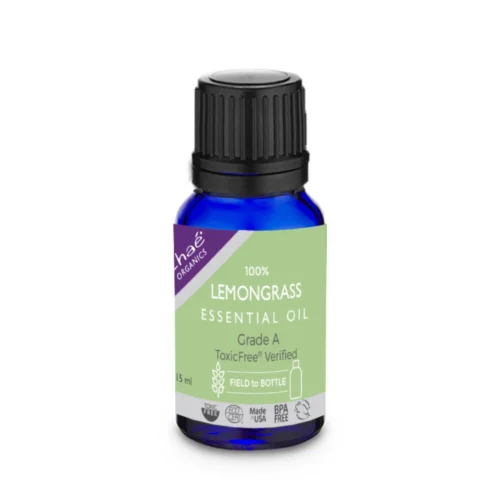
Savory, invigorating lemongrass from young leaves harvested on sunny days.

Zesty, green lime with a sweet edge—the wakeful scent of an early summer morning.
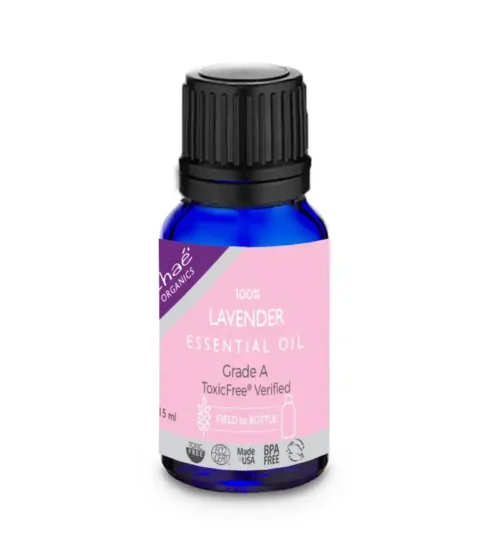
Sweet, herbal lavender from the first blooms of the season—made for slow evenings.
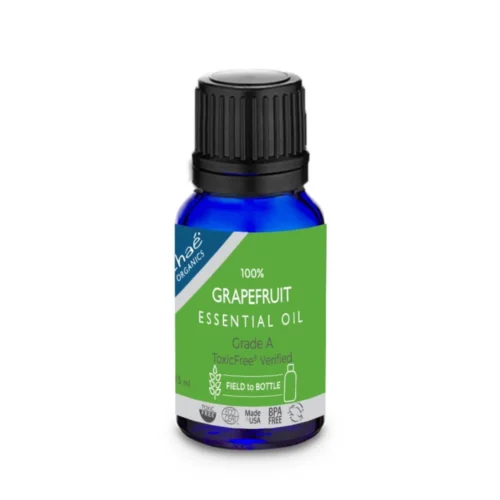
Juicy, bittersweet grapefruit with a tangy snap—an instant afternoon refresh.
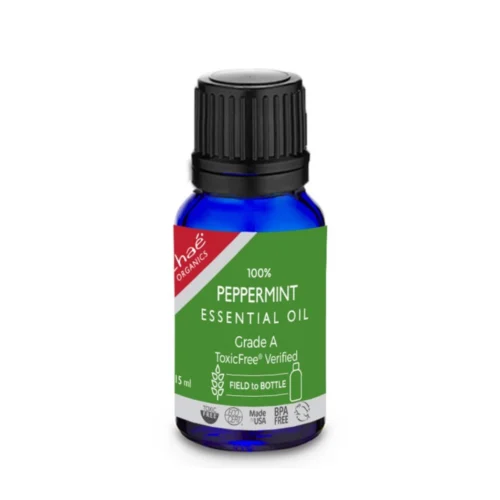
Crisp, cool English white peppermint — a wide-awake scent with a sweeter, floral edge.
Find out what essential oils are, how they work, and how they can help you get the results you want!
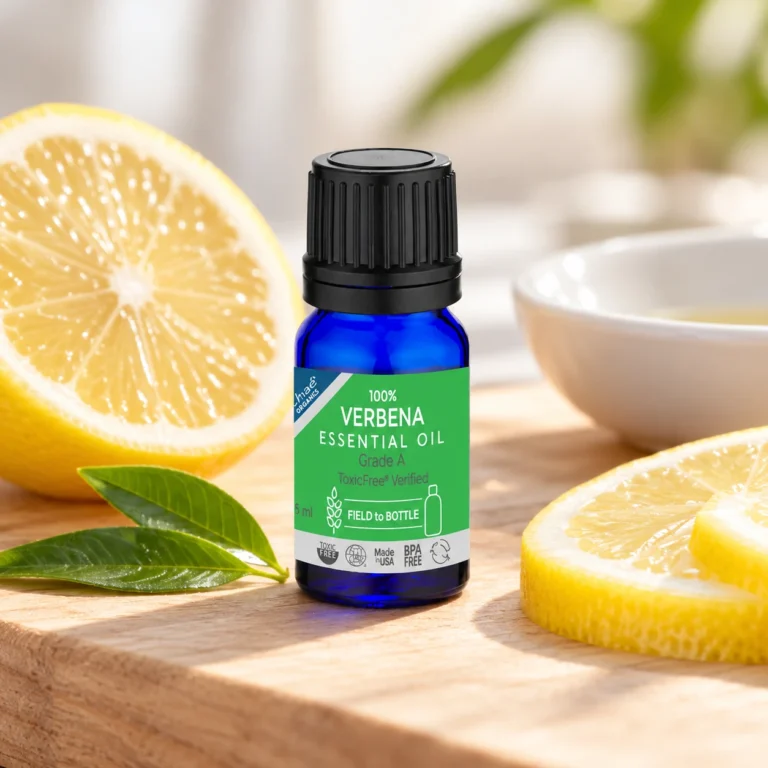
Verbena essential oil (Verbena officinalis): how it differs from lemon verbena, what it smells like, diffuser and room-mist blends, and why it's…
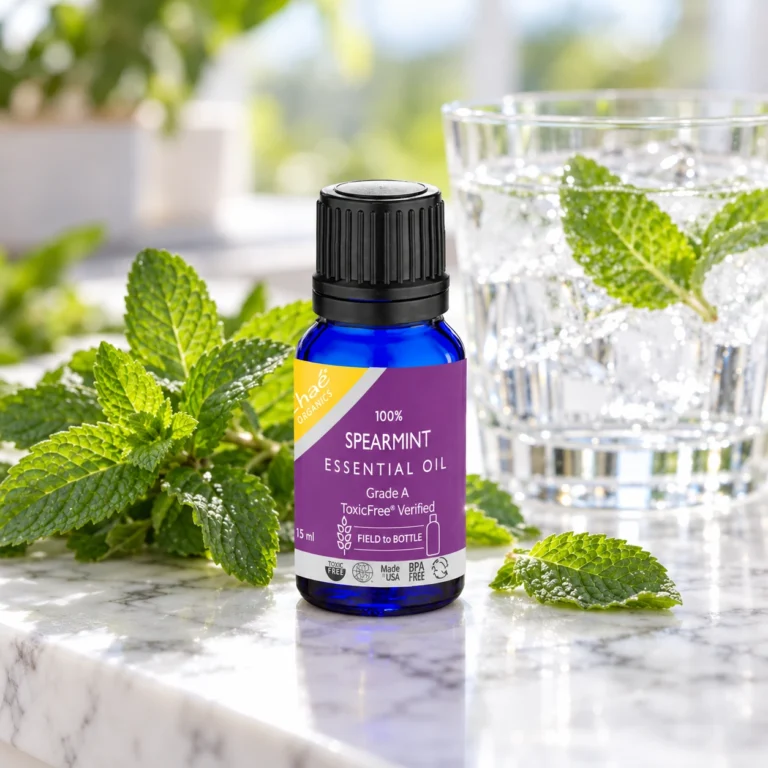
What spearmint essential oil is, how it differs from peppermint, diffuser blends and an easy room spray, and how to use it…
Sign up for ToxicFree® tips, new arrivals and member-only offers. Your code arrives in your welcome email.

Sign in to check out faster, track orders and manage Subscribe & Save.