
Take Control of Your Health and Wellbeing with Essential Oils
Find out what essential oils are, how they work, and how they can help you get the results you want!
 Certified ToxicFree® · Cruelty-free · Made in Colorado
Blood orange oil smells like a sweet orange with a tart, berry-like twist. Here are its properties in plain terms, whether it’s phototoxic, and how to use it in diffuser blends and a homemade spray.
Cut a blood orange in half and it looks like a sunset: deep red flesh streaked with orange. The oil comes from the peel, not that red flesh, but it carries the fruit’s personality all the same: juicy and sweet like any orange, with a tangier, slightly berry-like brightness.
It isn’t known for the sun reactions that come with bergamot, lime or lemon, and it is a natural in diffuser blends and homemade cleaning sprays.
The short version
Blood oranges are a group of sweet orange varieties, such as Moro, Tarocco and Sanguinello, with crimson flesh. The red comes from anthocyanins, the same family of pigments that colors cherries and blackberries, and it only develops fully when the fruit ripens through warm days and cold nights.

That climate shapes the peel, too. Ours is cold-pressed from the peels of freshly ripened blood oranges, picked by hand to keep their potency and fragrance, from fruit grown through hot, dry summers and cool, nippy winters. No additives, no fillers.
Cosmetic labels use standardized ingredient names, and Citrus Aurantium Dulcis is the one for sweet orange; dulcis means “sweet”. Botanists call sweet orange Citrus sinensis, and blood oranges are varieties of it. Don’t confuse it with Citrus aurantium amara, bitter orange: the first two words match, but it’s a different fruit, a different oil, and the one that is phototoxic.
Not as far as the evidence shows. Phototoxic citrus oils contain furocoumarins, compounds that react with sunlight on skin and can cause burns and dark patches. Sweet orange oil is generally not considered phototoxic, even when it is cold-pressed, and blood orange belongs to the sweet orange family.
It isn’t on the Tisserand Institute’s list of phototoxic or possibly phototoxic essential oils, and IFRA, which sets the fragrance industry’s safety standards, doesn’t restrict sweet orange oil for sun exposure the way it does bergamot, lime, lemon and grapefruit. Blood orange has been studied far less than ordinary sweet orange, and some sellers add a sun warning to be safe, but there is no known sun limit for it.
The sun note on our product pages is a general caution we give for every oil. Blood orange itself isn’t known to cause sun reactions.
Cold-pressed bitter orange oil is phototoxic, with a maximum of 1.25% on sun-exposed skin in both Tisserand and Young’s Essential Oil Safety and IFRA’s standard. If a recipe just says “orange oil” and you plan to wear it in the sun, check which orange it means.
Here is what the oil is like to use, in plain terms:
| Blood orange essential oil | |
|---|---|
| Plant part | Peel of red-fleshed blood oranges |
| How ours is made | Cold-pressed |
| Main aroma molecule | Limonene, typically about 90% or more of sweet orange oils |
| Scent | Zesty and juicy, tangy-sweet, slightly tart and berry-like |
| Place in a blend | Top note: bright up front, quick to fade |
| Phototoxic? | Not considered phototoxic |
| Shelf life once opened | About 6 to 12 months at room temperature, 1 to 2 years in the fridge |
Limonene does two practical things worth knowing. It is a natural solvent, which is why orange oil turns up in citrus cleaners. And it reacts with air over time, which is why a fresh bottle matters, especially for skin.
Blood orange is zesty and juicy up top, with a tangy sweetness and a slightly tart, berry-like brightness. It is calm and bright at once: the kind of citrus you diffuse to mellow the mood at home or at your desk.
A few diffuser blends to try, in drops for a standard water diffuser:
Start with 3 to 5 drops in the water reservoir, at home or at your desk, whenever the afternoon needs a pick-me-up. Diffuse for 30 to 60 minutes at a time rather than all day, in a room with some airflow.
For a sweet, just-peeled scent in the kitchen, bathroom or living room, mix in a 100 ml (about 3.4 oz) glass spray bottle:
Use glass: limonene can soften some plastics. Shake well before every spray, since oil and water separate. Mist into the air rather than onto people or pets, and test on a hidden spot before spraying fabric, painted or varnished surfaces. Think of it as a room freshener: essential oils add scent, they don’t replace your cleaner.
Stir 6 drops blood orange into 30 ml (1 oz) of jojoba or sweet almond oil for about 1%, or up to 12 drops for about 2%. Patch test on your inner arm first, keep it away from your eyes, and use a fresh bottle: oxidized citrus oil is far more likely to irritate.
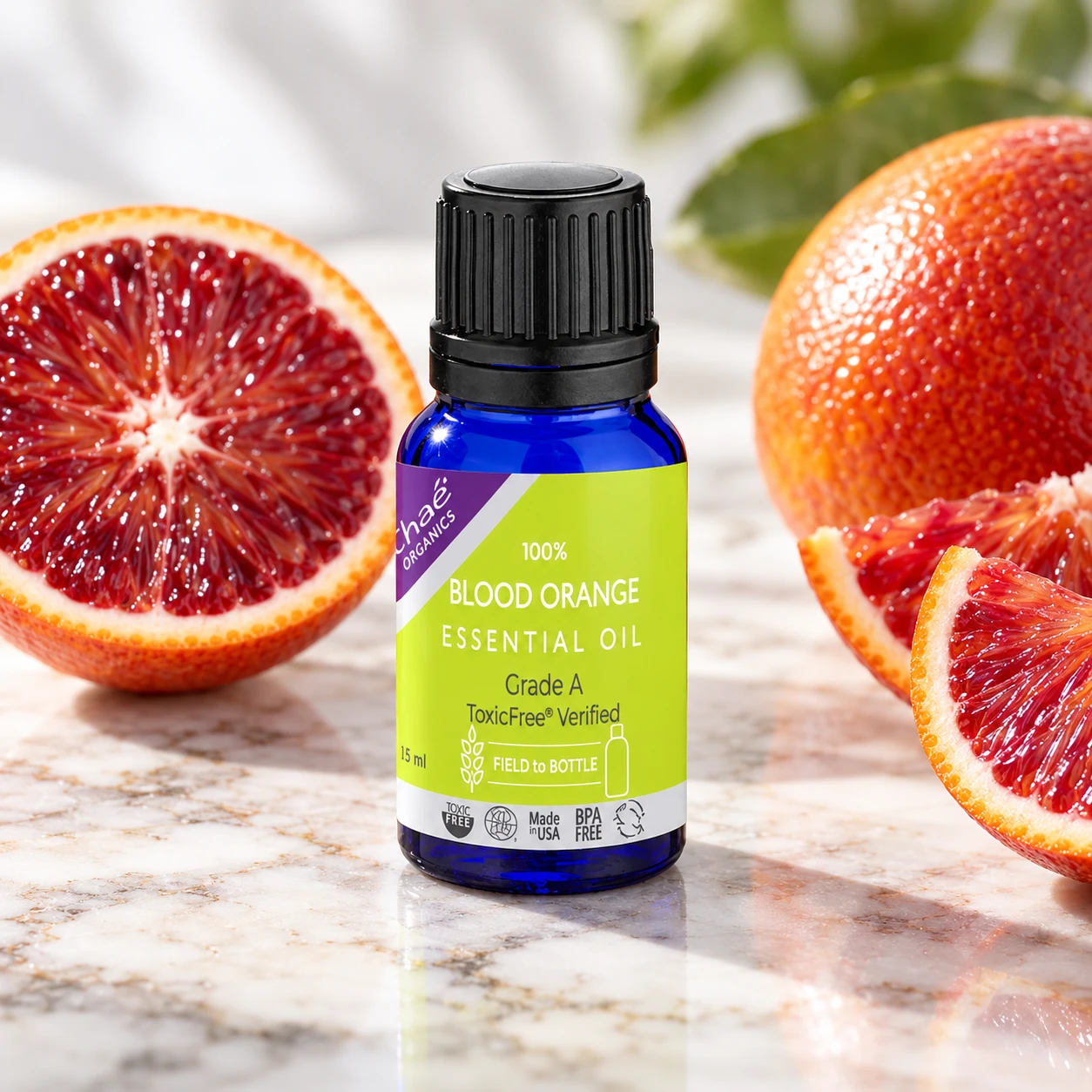
Search “benefits of blood orange essential oil” and you will find lists about mood, skin and more. A lot of blood orange research is about the juice and its red pigments, which you drink, not the peel oil you diffuse, and much of the rest comes from small studies. In the U.S., an oil sold to treat a health problem is regulated as a drug; ours is sold for its scent, and we don’t make health claims for it. If you are managing a health condition, talk with your doctor.
A few things on the label tell you a lot:
Blood orange is the friendly citrus: sweet, tangy and a little berry-bright, lovely with cinnamon or frankincense and perfect for a homemade spray. Unlike bitter orange, it isn’t known to be phototoxic. Dilute it for skin, keep it fresh, and it will make any room feel sunny.
It isn’t known to be. Blood oranges are sweet oranges, and sweet orange oil isn’t considered phototoxic, even cold-pressed. Bitter orange oil is phototoxic, so don’t confuse the two.
It is a cold-pressed peel oil, mostly limonene, with a zesty, juicy, tangy-sweet and slightly berry-like scent. It is a top note that fades fast, blends well with spice and resin, and oxidizes over time, so keep it fresh.
Yes. In a 100 ml glass spray bottle, mix about 90 ml distilled water, 10 ml witch hazel or high-proof vodka and 20 drops blood orange. Shake before each spray and mist into the air.
Be careful. The ASPCA lists the orange as toxic to cats and dogs because of its essential oils and psoralens. Diffuse only briefly in a ventilated room your pet can leave, and never apply oils to a pet.
Counting from the day you open it, about 6 to 12 months at room temperature, or 1 to 2 years tightly capped in the fridge. If it smells flat or “off”, replace it.
Every Chaé essential oil is 100% pure, Grade A, Certified ToxicFree® and Leaping Bunny certified, with the plant named on the label. Start with blood orange, then add a spice or a resin.
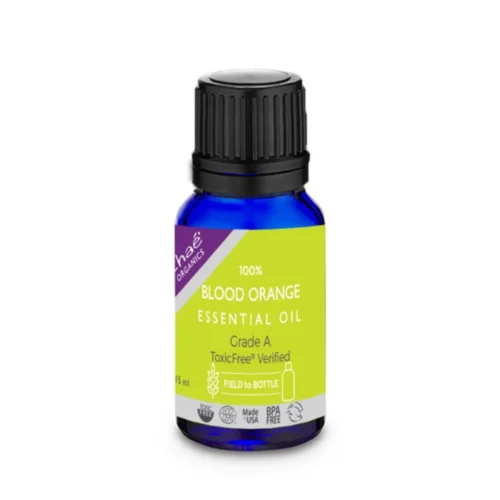
Sweet, tangy and juicy—blood orange brings a sunny, mellow mood to any room.

Like fresh cinnamon sticks, only deeper—sweet, spicy, warm and unmistakably bold.
Traceable, fair-trade frankincense with a spicy, earthy warmth and a hint of fruit.
Sweet, herbal lavender from the first blooms of the season—made for slow evenings.
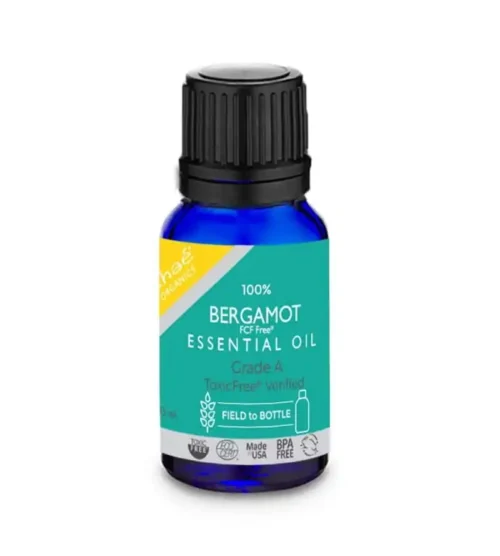
Fresh Italian citrus with a sweet, peppery heart—the refined note behind classic colognes.
Find out what essential oils are, how they work, and how they can help you get the results you want!
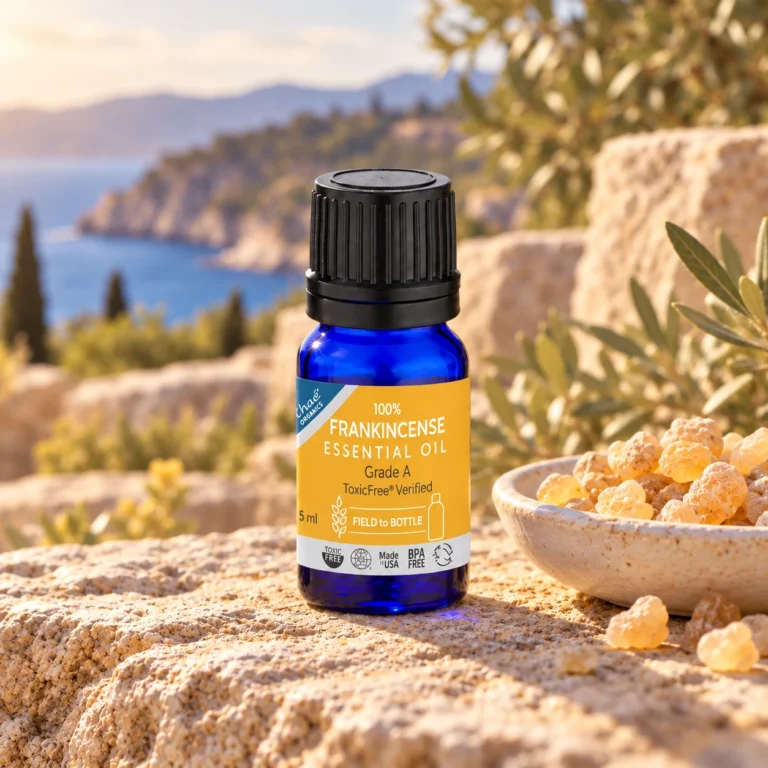
What frankincense essential oil is, how it is made from resin, diffuser blends, how to dilute it, and whether it is photosensitive…
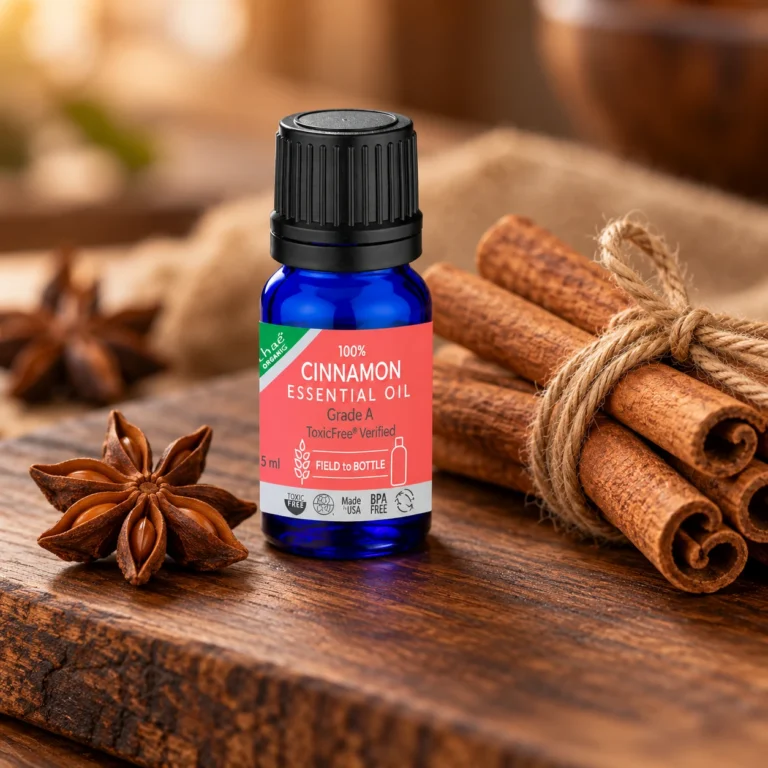
Cinnamon essential oil smells like baking day: sweet, spicy and deeply warm. It is also one of the strongest oils there is…
Sign up for ToxicFree® tips, new arrivals and member-only offers. Your code arrives in your welcome email.

Sign in to check out faster, track orders and manage Subscribe & Save.