
Take Control of Your Health and Wellbeing with Essential Oils
Find out what essential oils are, how they work, and how they can help you get the results you want!
 Certified ToxicFree® · Cruelty-free · Made in Colorado
Cinnamon essential oil smells like baking day: sweet, spicy and deeply warm. It is also one of the strongest oils there is on skin. Here is how cinnamon bark, cinnamon leaf and cassia oils differ, how to use cinnamon well, and how to keep it safe.
A cinnamon stick in your spice drawer is the dried bark of a tropical tree. Cinnamon bark essential oil is that same bark, distilled down to its scent. One drop in a diffuser and the whole house smells like cinnamon rolls in the oven.
That strength is the point, and also the catch. “Cinnamon oil” on a label can mean three quite different oils, and the one most people want, the bark oil, is the one that needs the most care on skin.
The short version
True cinnamon comes from a small evergreen tree in the laurel family. The spice is its inner bark: harvesters cut young shoots, peel the bark away in thin, papery layers, and let it dry and curl into the soft, many-layered quills sold as Ceylon cinnamon sticks.

Ours is true Ceylon cinnamon, grown in a tropical climate, from trees first harvested at about three to four years old. The bark is gathered just twice a year, right after each rainy season, when the damp air softens it enough to peel away easily. Only the bark goes into our oil, and it is steam-distilled: steam carries the bark’s aromatic oil away, and the oil separates from the water as it cools.
Zeylanicum means “of Ceylon”, the old name for Sri Lanka. Cinnamomum zeylanicum, the name on our bottle, is the classic name for true cinnamon. Today botanists usually call the same tree Cinnamomum verum, “true cinnamon”, so you will see both. Neither is cassia, Cinnamomum cassia, a related tree that supplies much of the ground cinnamon sold in U.S. stores.
All three oils smell like cinnamon, but they come from different parts of the tree, or different trees, and they behave very differently on skin. The difference comes down to two molecules. Cinnamaldehyde gives cinnamon bark its sweet, unmistakable warmth. Eugenol, the main molecule in clove, makes leaf oil smell spicier and more clove-like.
| Cinnamon bark (ours) | Cinnamon leaf | Cassia | |
|---|---|---|---|
| Tree | Ceylon cinnamon | Ceylon cinnamon | Chinese cinnamon (Cinnamomum cassia) |
| Part distilled | Bark | Leaves | Usually leaves and twigs |
| Main aroma molecule | Cinnamaldehyde | Eugenol | Cinnamaldehyde |
| Scent | Sweet, rich and warm, like fresh cinnamon sticks | Spicy and clove-like, thinner | Hot and sharp |
| Tisserand & Young skin maximum | 0.07% | 0.6% | 0.05% |
Bark oil is the one that smells like the spice jar. Leaf oil is gentler on skin, but it smells more like clove. Cassia is close to bark oil in scent and just as strong on skin. If a label only says “cinnamon oil”, it doesn’t tell you which one you are buying.
No. Cinnamon bark oil isn’t phototoxic. Phototoxic oils contain furocoumarins, compounds that react with sunlight on the skin and can cause redness, blistering or dark patches that last for months. They show up mainly in cold-pressed citrus oils such as bergamot, lime and bitter orange. Cinnamon isn’t among the oils known to be phototoxic. Its problem on skin is sensitization, not sunlight.
The sun note on our product pages is a general caution we give for every oil. Cinnamon itself isn’t known to cause sun reactions.
Our cinnamon is intense, sweet and spicy, with a deep, earthy warmth that lingers. It is cozy and energizing at once: lovely on a gray afternoon, on a chilly evening, or when guests are on their way.
Because it is so strong, use one drop of cinnamon and let the other oils fill out the blend. A few diffuser blends to try, in drops for a standard water diffuser:
Start with a single drop, two at most, alone or with three or four drops of a partner oil. Diffuse for 30 to 60 minutes at a time rather than all day, in a room with some airflow.
For a bakery-sweet scent without a diffuser, add one drop to a small pot of water on the lowest heat, with a few slices of orange or apple if you like. Top up the water as it simmers, and never leave it unattended. Or add a drop to a bowl of potpourri or pinecones and refresh it every week or so. Keep both out of reach of children and pets, who may lick or chew them.
Cinnamaldehyde is a powerful skin allergen. The Tisserand Institute calls it the highest-risk essential oil constituent known from patch testing, and in its survey of people who had used cinnamon bark or cassia oil, 27% reported an adverse reaction. Using the oil undiluted made a reaction more likely.
Tisserand and Young’s 0.07% maximum works out to one drop in at least 75 ml (2.5 oz) of carrier oil. Even one drop in a 30 ml (1 oz) bottle is more than twice that. So our advice is simple: enjoy cinnamon in the air, not on your skin. Never use it neat, never in the bath, and never near the eyes, lips or sensitive areas.
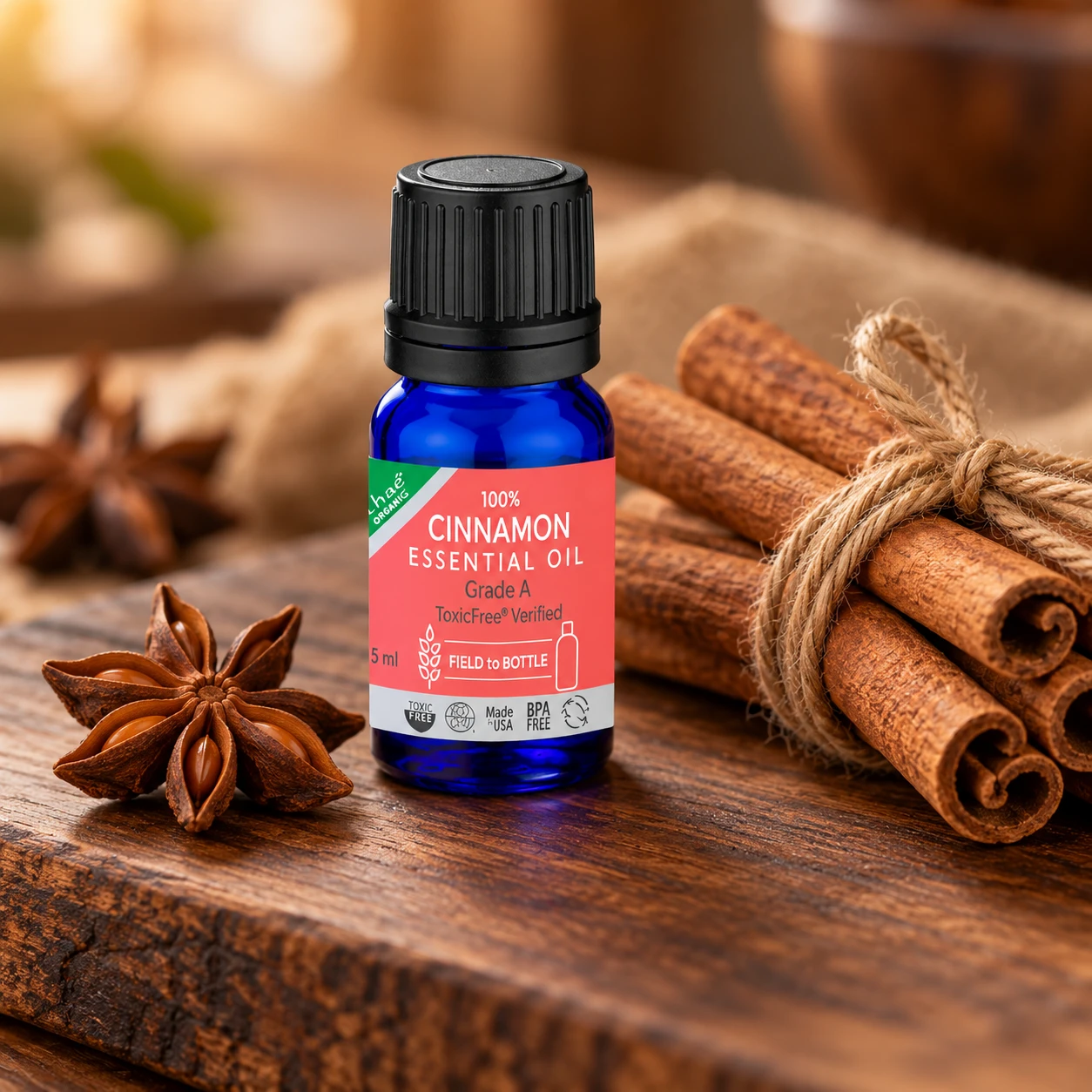
Search “cinnamon oil benefits” and you will find claims about blood sugar, germs, circulation and more. Much of that research is on cinnamon the spice, eaten in food, or on lab studies, not on essential oil in a diffuser. In the U.S., an oil sold to treat a health problem is regulated as a drug; ours is sold for its scent, and we don’t make health claims for it. If you are managing a health condition, talk with your doctor.
Cinnamon bark is one of the oils that asks for the most care. A few simple habits keep it pleasant:
A few things on the label tell you a lot:
Cinnamon bark oil is pure coziness in a bottle: sweet, spicy and warm, and strong enough that one drop scents a room. It isn’t phototoxic, but it is one of the strongest skin sensitizers there is, so keep it in the diffuser, the simmer pot and the potpourri bowl. Pair a single drop with blood orange or frankincense, and your home will smell like the holidays.
Bark oil is distilled from the bark and is mostly cinnamaldehyde, which gives it the sweet smell of cinnamon sticks. Leaf oil comes from the leaves of the same tree and is mostly eugenol, so it smells more like clove. Bark oil is much stronger on skin.
No. Cassia comes from a related tree, Cinnamomum cassia, usually from its leaves and twigs. Like cinnamon bark oil, it is mostly cinnamaldehyde and very strong on skin. Ours is true Ceylon cinnamon bark, not cassia.
We don’t recommend it. Tisserand and Young set a maximum of 0.07% for cinnamon bark oil, which is one drop in at least 75 ml (2.5 oz) of carrier oil. Never use it neat or in the bath.
No. Cinnamon isn’t among the oils known to be phototoxic; that is mainly a problem with cold-pressed citrus oils. Its risk on skin is sensitization, not sun sensitivity.
Be careful, especially with cats. Use one drop, diffuse only briefly in a ventilated room your pet can leave, and keep simmer pots and potpourri out of reach. Ask your vet if your pet has breathing problems.
Kept tightly capped, cool and out of the light, about two to three years. If it smells flat or “off”, it is time for a fresh bottle.
Every Chaé essential oil is 100% pure, Grade A, Certified ToxicFree® and Leaping Bunny certified, with the plant named on the label. Start with cinnamon, then add a warm partner.

Like fresh cinnamon sticks, only deeper—sweet, spicy, warm and unmistakably bold.
Sweet, tangy and juicy—blood orange brings a sunny, mellow mood to any room.
Traceable, fair-trade frankincense with a spicy, earthy warmth and a hint of fruit.
Sharp, sparkling lemon zest—sunshine in a bottle for your mood and your home.

Step into a Mediterranean cypress grove: earthy, woody and faintly citrusy.

Find out what essential oils are, how they work, and how they can help you get the results you want!
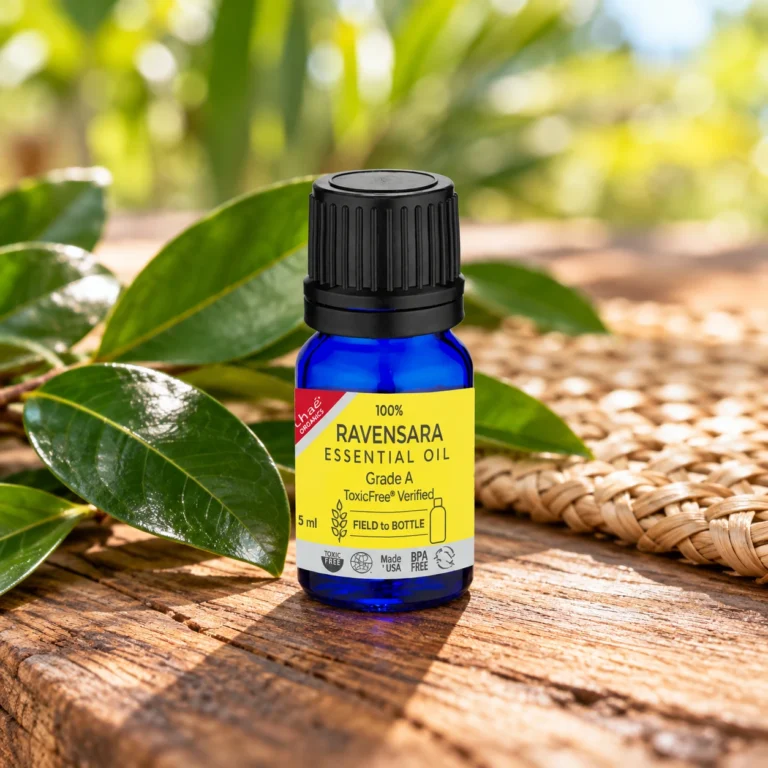
Ravensara and ravintsara come from different trees. What ravensara essential oil is, how it smells, diffuser blends, and safe, sparing skin use.
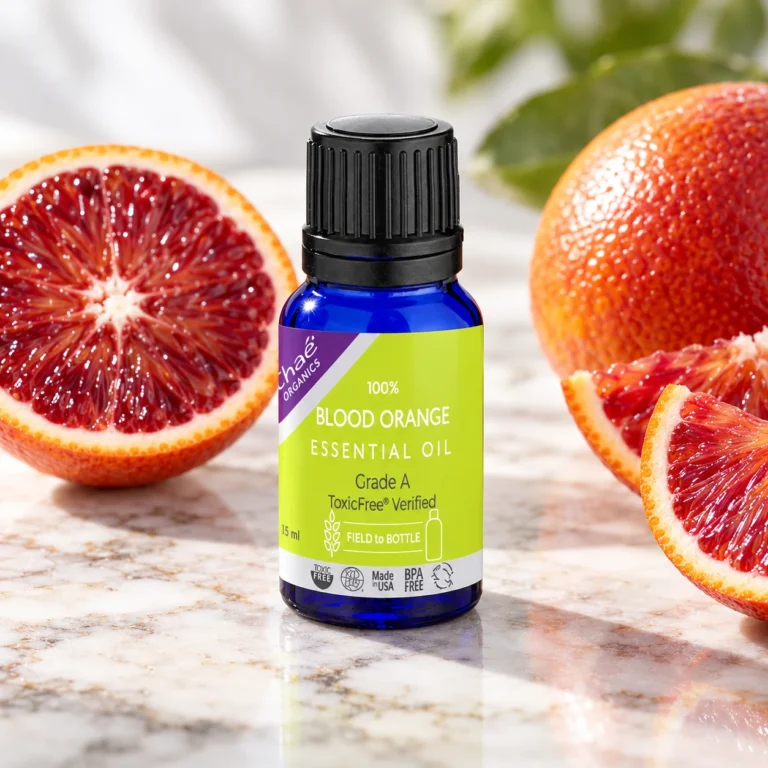
Blood orange essential oil properties, whether it's phototoxic (unlike bitter orange), diffuser blends with cinnamon, and a homemade room spray.
Sign up for ToxicFree® tips, new arrivals and member-only offers. Your code arrives in your welcome email.

Sign in to check out faster, track orders and manage Subscribe & Save.