
Take Control of Your Health and Wellbeing with Essential Oils
Find out what essential oils are, how they work, and how they can help you get the results you want!
 Certified ToxicFree® · Cruelty-free · Made in Colorado
Spearmint is the mint for people who find peppermint a little much: sweet, round and easygoing, with the familiar smell of spearmint gum. Here is what it is, how to use it, and how to use it well.
Open a bottle of peppermint oil and it gets your attention right away: icy, sharp, almost cold in the nose. Open spearmint and the welcome is softer. It is still clearly mint, still fresh and clean, but sweeter and rounder, the way a sprig of garden mint smells when you brush past it.
That difference is not just a matter of taste. It comes down to chemistry, and it changes how spearmint is used: in the diffuser, around the house, and on skin.
The short version
Spearmint is a leafy, spreading mint with bright green, pointed, deeply veined leaves, the “spear” in its name. It is one of the oldest cultivated mints and the one most people picture when they think of mint in the garden or in a glass of iced tea.

The essential oil is made by steam distillation: steam passes through the freshly harvested leafy tops, carries the plant’s aromatic oil with it, and the oil separates from the water as it cools. It takes a lot of plant to fill a small bottle, which is why freshness of the harvest matters so much. Ours is made only from high-quality mint secured once a year from a fresh plantation, never mint that has been sitting in storage.
Plant names travel. Mentha viridis, “green mint”, is a long-standing name for spearmint and the one printed on our bottle. You will also see spearmint listed as Mentha spicata. Whichever name you see, check that it is there at all: a real essential oil names its plant. “Mint oil” or “mint fragrance” on its own tells you very little.
Spearmint and peppermint are close relatives (peppermint is in fact a natural hybrid of spearmint and water mint), but their oils are built differently. The main aroma molecule in spearmint is carvone. In peppermint, it is menthol, the compound that triggers your skin’s cold-sensing nerves and makes peppermint feel cool on contact. Spearmint has very little menthol, so it smells fresh without the chill.
| Spearmint | Peppermint | |
|---|---|---|
| Main aroma molecule | Carvone | Menthol |
| Scent | Sweet, soft, rounded, like spearmint gum | Sharp, icy, intense |
| Feel | Fresh, without a cold tingle | Cooling, tingly |
| Strength in a blend | Plays well with others | Can take over quickly |
| Good choice if… | You find peppermint too strong, or want a mint for everyday diffusing | You want a bold, wake-you-up mint |
Neither is “better”. They are different tools. Plenty of people keep both: peppermint for a sharp blast of freshness, spearmint for a lighter mint they can enjoy all afternoon. A drop of each together makes a fuller “double mint” that is less sharp than peppermint alone.
Spearmint is cool, sweet and refreshing, with a soft, slightly bitter green edge, like crushing a leaf between your fingers. It is cheerful rather than stimulating, which is why it has long been used in aromatherapy for a light, happy lift.
It is also one of the easiest oils to blend. Citrus brightens it, lavender softens it, and peppermint deepens the mint. A few diffuser blends to try, in drops for a standard water diffuser:
Start with 3 to 5 drops in the water reservoir and adjust from there. Spearmint is gentle, but a little still goes a long way. Diffuse for 30 to 60 minutes at a time rather than all day, in a room with some airflow. It is a lovely oil for a home office or a study table: fresh without being distracting.
For a clean mint note in the kitchen or bathroom, mix in a 100 ml (about 3.4 oz) glass spray bottle:
Shake well before every spray, since oil and water separate. Mist into the air rather than onto people or pets, and test on a hidden spot before spraying fabric. Think of it as a room freshener: essential oils add scent, they don’t replace your cleaner.
Never apply spearmint, or any essential oil, undiluted. For a gentle mint scent on the body, about 1% is plenty: roughly 5 to 6 drops in 30 ml (1 oz) of a carrier oil such as jojoba or sweet almond. Use less on the face, keep it well away from the eyes, and try a small patch on your inner arm first. Spearmint can irritate or sensitize skin at full strength, so if your skin reacts, stop using it.
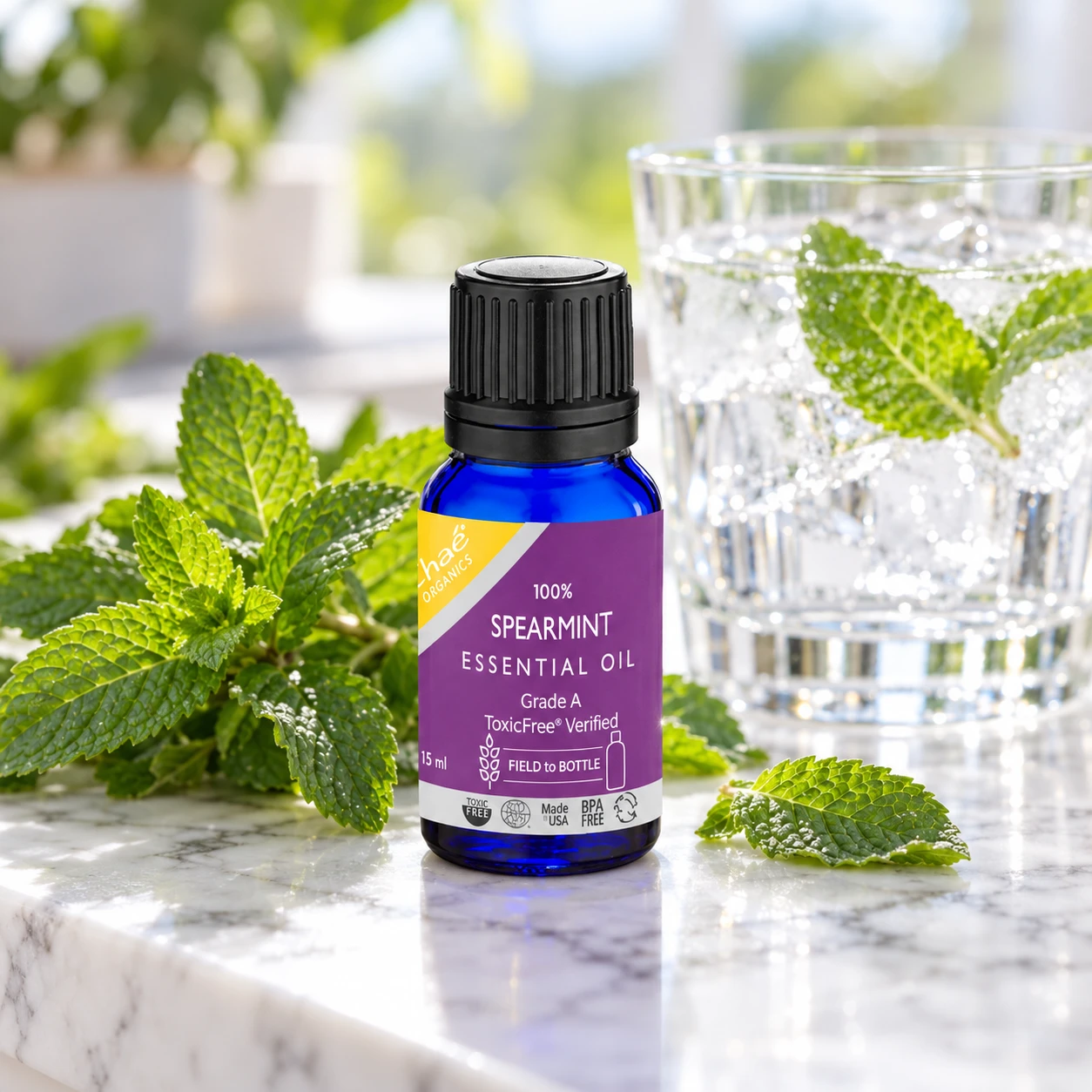
Search “spearmint oil benefits” and you will find long lists. Much of that comes from research on spearmint tea or from small, specific studies, not from a diffuser at home. In the U.S., an oil sold to treat a health problem is regulated as a drug; ours is sold for its scent, and we don’t make health claims for it. If you are managing a health condition, talk with your doctor.
Spearmint is one of the gentler oils, but gentle is not the same as harmless. Essential oils are highly concentrated plant extracts, and a few simple habits keep them pleasant:
A few things on the label tell you a lot:
Spearmint is the friendly mint: sweet, soft and refreshing, easy to blend, and easy to live with every day. Use it in the diffuser, in a simple homemade room spray, or well diluted on skin, keep it away from little hands and curious cats, and it will make a room smell fresh without shouting about it.
No. They are related plants, but spearmint oil is mostly carvone and peppermint oil is mostly menthol. Spearmint smells sweeter and softer and doesn’t feel cold; peppermint is sharper and cooling.
Only diluted. About 1% (5 to 6 drops per 30 ml of carrier oil) is plenty for the body, less for the face. Patch test first, and stop if your skin reacts.
Be careful, especially with cats. Diffuse only briefly, in a ventilated room your pet can leave, and never apply oils to a pet. Ask your vet if your pet has breathing problems.
We don’t recommend swallowing essential oils. Our Spearmint Essential Oil is meant for diffusing, room sprays and diluted skin use.
It has far less menthol, but it is still a concentrated oil. Keep the bottle out of reach, and check with your pediatrician before using any mint oil on or near young children.
Kept tightly capped, cool and out of the light, about two to three years. If it smells flat or sharp and “off”, it is time for a fresh bottle.
Every Chaé essential oil is 100% pure, Grade A, Certified ToxicFree® and Leaping Bunny certified, with the plant named on the label. Start with spearmint, then build a blend.
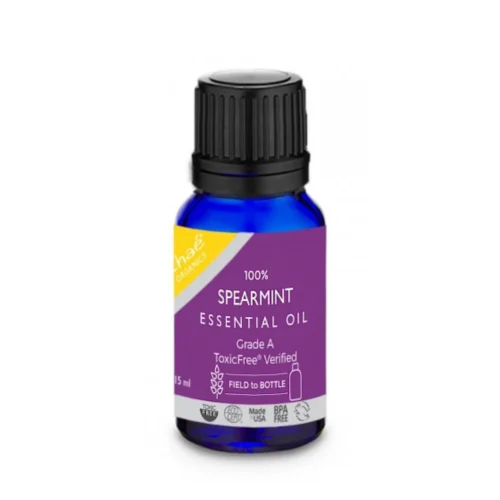
The sweet, easygoing mint: soft, rounded spearmint that’s gentler than peppermint.
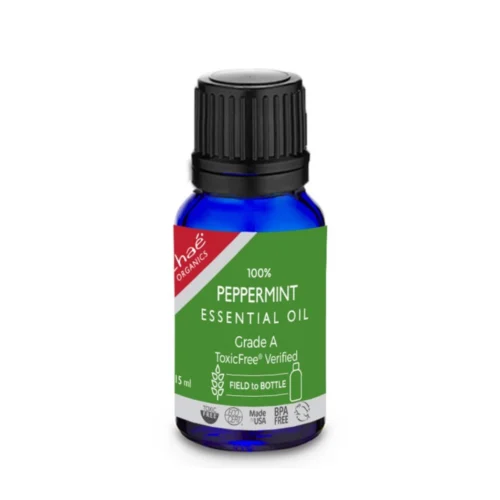
Crisp, cool English white peppermint — a wide-awake scent with a sweeter, floral edge.
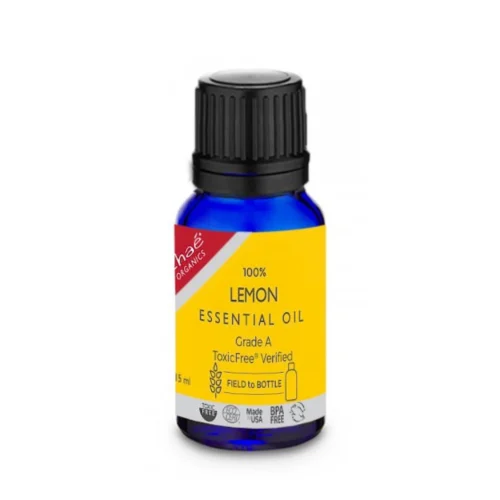
Sharp, sparkling lemon zest—sunshine in a bottle for your mood and your home.
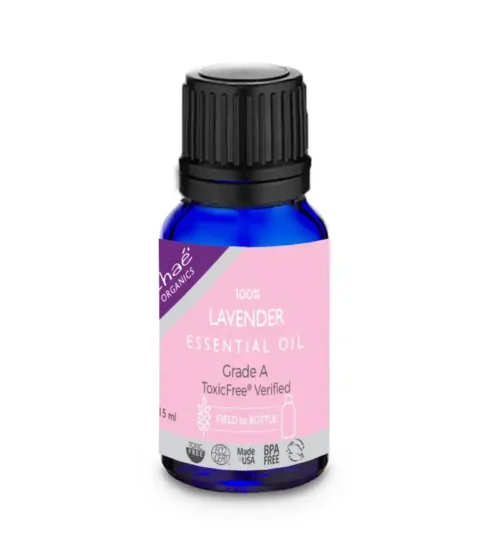
Sweet, herbal lavender from the first blooms of the season—made for slow evenings.

Zesty, green lime with a sweet edge—the wakeful scent of an early summer morning.
Find out what essential oils are, how they work, and how they can help you get the results you want!
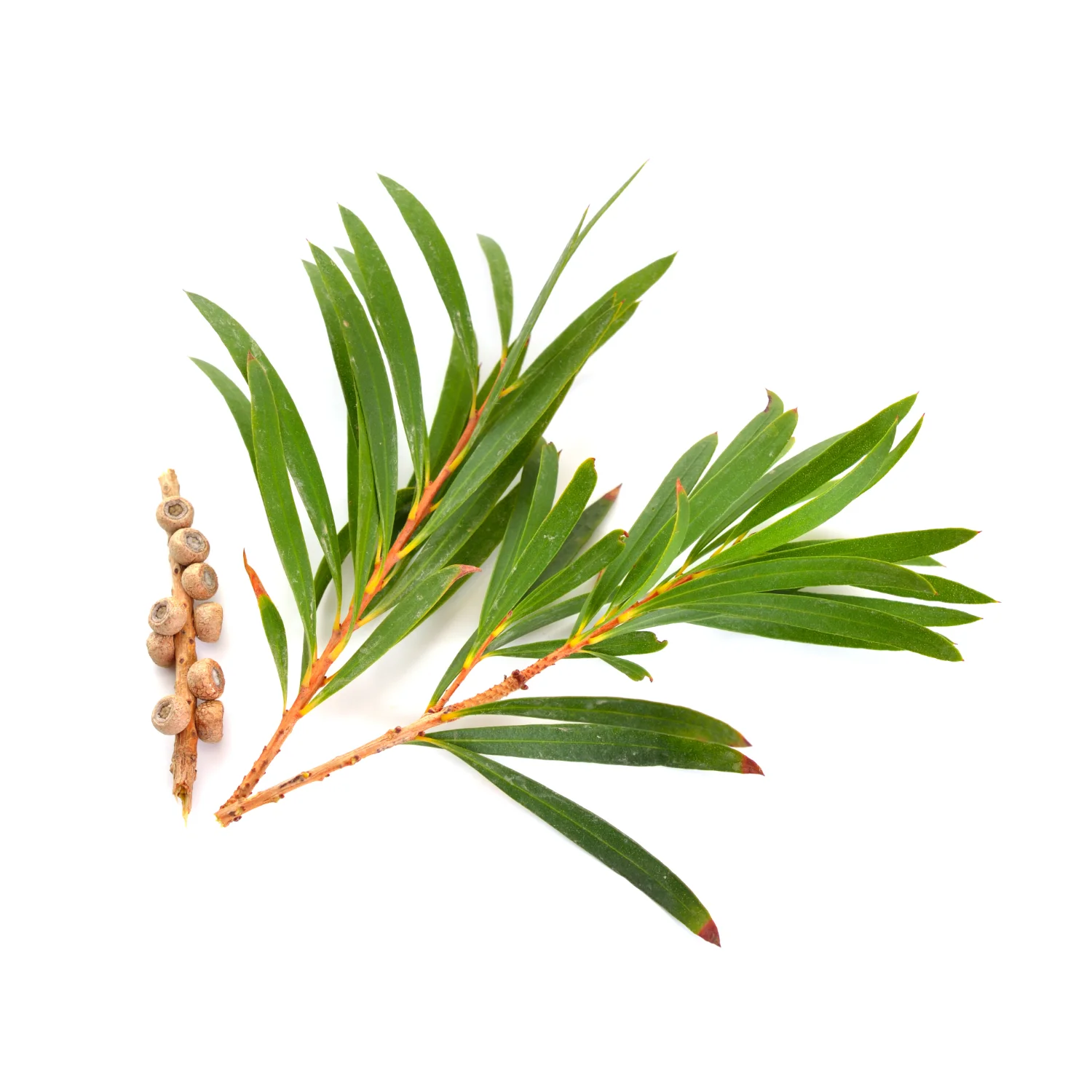
Where tea tree oil comes from, how to use it for skin, scalp, home and aromatherapy, the best oils to blend it…

What “100% Pure” really means, and why toxic-free, natural products are better for your health, sensitive skin, the planet and the animals…
Sign up for ToxicFree® tips, new arrivals and member-only offers. Your code arrives in your welcome email.

Sign in to check out faster, track orders and manage Subscribe & Save.