
Chaé Skincare Regimen – 4 Simple Steps for all skin types
Chaé’s four-step routine (cleanse or exfoliate, mist, serum, moisturize) with the products to reach for at each step, whatever your skin type.
 Certified ToxicFree® · Cruelty-free · Made in Colorado
CoQ10 is one of the few skincare ingredients your own body makes. Here is what it is, what it actually does in a face cream, how ubiquinone and ubiquinol differ, and what to look for when you choose a CoQ10 moisturizer.
Coenzyme Q10 shows up on supplement shelves and in face creams, and the two get mixed up all the time. One is something you swallow for the rest of your body. The other is something you put on your face for how your skin looks and feels.
This guide is about the second one: what CoQ10 does in a cream or lotion, what the research does and doesn’t show, and how to read a CoQ10 moisturizer’s label so you know what you are getting.
The short version
Coenzyme Q10 is a fat-soluble molecule made by the body and found in almost every cell. Its main job is in the mitochondria, the parts of the cell that turn food into energy. It is also an antioxidant, one of the molecules that help neutralize the unstable oxygen molecules that build up from sunlight, pollution and everyday wear.
Skin makes its own CoQ10, but researchers have found that levels in skin decline with age and with sun exposure. That is the idea behind putting it in skincare: give skin a little more of an antioxidant it already uses.
In a moisturizer, CoQ10 is there for antioxidant support, to help skin look radiant, refreshed and more awake. The research is promising, and it is worth knowing what it covers:
Those are encouraging results, and they come from a company that sells CoQ10 creams, which is worth keeping in mind. What they support is CoQ10 as an antioxidant ingredient that skin can take up. That is how we use it: as one part of a moisturizer built to help skin look brighter, smoother and better hydrated.
CoQ10 exists in two forms, and you will see both names on labels:
| Ubiquinone | Ubiquinol | |
|---|---|---|
| What it is | The oxidized form of CoQ10 | The reduced form of CoQ10 |
| Where you see it | Most face creams and lotions | Mostly supplements |
| Stability | More stable in a formula | Converts back to ubiquinone easily when exposed to air |
| On our label | Yes: “Ubiquinone (CoQ10)” | No |
Your body switches between the two forms all the time, so neither is “fake” CoQ10. In a cream that sits in a jar on your counter, ubiquinone’s stability is the practical advantage.
The CoQ10 is the same; the texture is what changes. A lotion is lighter and spreads easily, which suits oily skin, warm weather or the body. A cream is richer and better for dry skin and nighttime. A serum is the lightest and is meant to go under a moisturizer.
Ours sits in between: a velvety moisturizer that feels cushiony and silky, absorbs well and leaves skin soft and bouncy, not oily. It works morning and night, and over a serum.

Our CoQ10 Revitalizing Moisturizer blends CoQ10 with a stable vitamin C, a peptide, nutrient-rich oils and deep hydrators. Here is the formula, grouped by what each part does:
A good moisturizer can help skin look more radiant, smoother and firmer and feel better hydrated, and the right ingredients make a visible difference. In the U.S., a product sold to treat a skin condition, or to change the skin’s structure, is regulated as a drug. Our CoQ10 moisturizer is a cosmetic, and our claims are about how skin looks and feels. If you are concerned about a skin condition, talk with a dermatologist.
CoQ10 is an antioxidant your skin already uses, and the research shows skin can take it up from a cream. On its own it is one helpful ingredient; in a well-built moisturizer, alongside a stable vitamin C, a peptide and real hydrators, it becomes part of a routine that helps skin look more awake. Look for it by name, in opaque packaging, with a full ingredient list, and wear sunscreen in the morning.
It is an antioxidant. In a face cream it helps skin look radiant and refreshed, and studies show skin can take up CoQ10 applied to it, raising its own CoQ10 level.
The CoQ10 is the same; the texture differs. Lotions are lighter, creams are richer. Ours is a velvety moisturizer in between, cushiony but never oily.
They are two forms of CoQ10. Ubiquinone, the form in most creams including ours, is more stable in a formula. Ubiquinol is common in supplements and converts back to ubiquinone easily in air.
Yes. They work well together, and our CoQ10 moisturizer contains both: CoQ10 and ethyl ascorbic acid, a stable form of vitamin C.
Yes. Ours is made for morning and/or night use. In the morning, follow it with sunscreen.
CoQ10 is generally well tolerated, but every formula is different. Patch test any new moisturizer on a small area for a few days before using it all over your face.
Our CoQ10 Revitalizing Moisturizer is Certified ToxicFree® and Leaping Bunny certified. Pair it with the serum that fits your skin.

Firming, brightening moisture that makes skin look more awake—fast.

Glow, bounce and all-day moisture for skin that looks dull, tired or stressed.
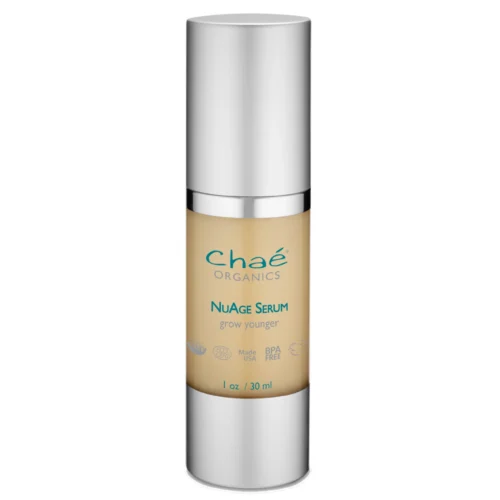
Lift, smooth, and restore—skin that looks as strong as it feels.

Vitamin C glow—without the sting. Brighter tone, calmer skin, and a smoother look.
Chaé’s four-step routine (cleanse or exfoliate, mist, serum, moisturize) with the products to reach for at each step, whatever your skin type.
Seven core steps, plus the habits around them — customizing, masks, lifestyle, nutrition, life stages, and ethical choices — for healthier, glowing…

For Discover Girl Day 2024, we celebrate women in STEM, and the story of how our founder, Linda Chae, put science to…
Sign up for ToxicFree® tips, new arrivals and member-only offers. Your code arrives in your welcome email.

Sign in to check out faster, track orders and manage Subscribe & Save.