
Is Your Deodorant Doing More Harm Than Good? What to Know About Aluminum-Free Deodorant
Deodorant and antiperspirant aren’t the same thing. Here’s what aluminum-free deodorant does, what to expect when you switch, and what to look…
 Certified ToxicFree® · Cruelty-free · Made in Colorado
Glutathione is the antioxidant your own cells make. Here’s what it does, why your levels drop with age and stress, and simple ways to support them.

Glutathione is often called a supermolecule, and it has earned the name. It is central to how your body protects its cells, and research on it spans skin, body, and hair. As one researcher puts it:
“GSH is one of the most extensively studied chemicals of the human body and its decline with aging and disease risk is well established. GSH is needed both for maintenance of normal metabolism and for defense against a range of disease and toxicity mechanisms.”
— Dean P. Jones, Ph.D., Natural Medicine Journal
On the skin, glutathione is prized for helping reduce the look of wrinkles, brown spots, and bumps, and for temporary relief from everyday discomfort — while supporting physical and mental well-being. How can one molecule do so much? It starts with what it is.
The short version
Glutathione is made up of three uniquely bound amino acids — cysteine, glutamic acid, and glycine — which is why it is called a tripeptide. Your body uses it to protect against chemical and environmental threats, and it is found in every cell.
Think of GSH as a free radical magnet at the top of the key antioxidants, which include vitamins C and E. By guarding tissues against oxidative damage, it helps the body restore itself. And GSH is uniquely able to meet the body’s challenges and then replace itself, so it can keep working.
That makes glutathione one of the body’s main tools for meeting both short-term and long-term challenges. Its protective roles include clearing toxic chemicals, strengthening antioxidant defenses, and maintaining everyday health. When GSH runs short, cells cannot maintain normal function.
Think of your GSH supply as a four-day bank account. An illness, pain, inflammation, even a sunburn can overdraw it, leaving you short on one of the most important building blocks of health. A poor lifestyle, toxins, and stress drain it too. That is why it matters to keep your glutathione topped up, so your immune system and energy levels stay balanced and supported.
Age plays a part as well. Glutathione production drops each decade, and that decline is now thought to be one of the factors behind many age-related complaints. Joint and muscle pain is often blamed on age alone, when the buildup of toxins, scar tissue, and oxidation takes a toll of its own.
PubMed lists thousands of articles on glutathione, including its potential for easing both chronic and acute pain. And the link between low glutathione and long-term health is one researchers take seriously:
“If you have a chronic disease, most serious chronic diseases are associated with low levels of Glutathione. If you have diabetes, if you’ve gone through cancer, if you’re struggling with a serious infection that may indicate that you are depleting your Glutathione.”
— Dr. David Katz, founding (1998) director of the Yale University Prevention Research Center
GSH takes part in a wide range of the body’s processes. Four of them stand out.
Oxidative stress is an imbalance between the free radicals your body produces and its ability to neutralize them. Free radicals are highly reactive molecules that can damage cells, and they are linked to problems including cancer, heart disease, and premature aging. By neutralizing free radicals, GSH helps protect your cells and supports overall health.
GSH is involved in the production of cytokines, the molecules that help regulate the body’s immune response. A well-regulated immune system is part of how the body defends itself.
This is one of glutathione’s best-known jobs. GSH binds to toxic compounds — heavy metals, pesticides, other environmental pollutants, xenobiotics (substances foreign to the body), and reactive oxygen species — and neutralizes them before they can damage cells. It also takes part in the metabolism of drugs and other xenobiotics, converting them into less toxic forms and helping the body excrete them. It even plays a role in gene expression: it binds to transcription factors and modulates their activity, which can affect the genes involved in detoxification.
GSH is involved in producing ATP, the main source of energy for your cells. More available energy supports physical performance and helps you feel less fatigued.
Glutathione shows up in your mirror, too. It helps reduce the appearance of wrinkles and age spots, supports a more even skin tone and smoother texture, and helps protect skin cells from damage caused by UV radiation.
Inside the body, GSH is also involved in DNA repair, in building proteins, lipids, and other molecules that cells need, in regulating inflammatory molecules, and in the regulation of normal cell death. It helps protect neurons from oxidative stress. Because of all this, researchers study glutathione in connection with many chronic and age-related conditions, including heart disease, diabetes, cancer, autoimmune conditions such as rheumatoid arthritis and lupus, and neurodegenerative conditions such as Alzheimer’s and Parkinson’s.
The takeaway is simple: keeping adequate glutathione levels is part of maintaining good health. A skin cream isn’t a substitute for medical care, though. If you have a health condition, talk with your doctor.
Low GSH levels are associated with fatigue, weaker immune defenses, and a higher risk of disease. Fortunately, there are several natural ways to support your levels:
These simple steps help your body keep its glutathione account in the black — and support your overall health.
Glutathione (GSH) is a tripeptide made of three amino acids — cysteine, glutamic acid, and glycine. It is found in every cell of the body and is one of its most important antioxidants, alongside vitamins C and E.
Your body keeps only a small reserve — think of it as a four-day bank account. Illness, pain, inflammation, sunburn, stress, toxins, and a poor lifestyle draw it down, and glutathione production also declines each decade.
Eat a balanced diet with cruciferous vegetables, garlic, onions, and turmeric; exercise at least 30 minutes most days; sleep 7–9 hours a night; and ask your doctor whether supplements such as NAC or ALA are right for you.
Oral glutathione breaks down in the stomach before it reaches your cells. A transdermal cream delivers it through the skin, where it stays stable and active.
Both Chaé glutathione creams use transdermal delivery with a full recommended dose of glutathione per application. G-Force is made for your skin — the look of fine lines and brown spots — while the Muscle and Pain Cream pairs glutathione with menthol, eucalyptus, and peppermint for cooling, temporary relief.
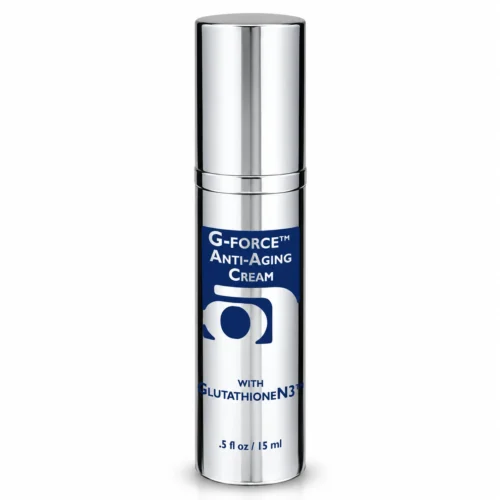
A high-antioxidant face cream designed to fight the look of aging—powered by topical glutathione.

A cooling, then warming massage cream for muscles that feel tight and overworked.
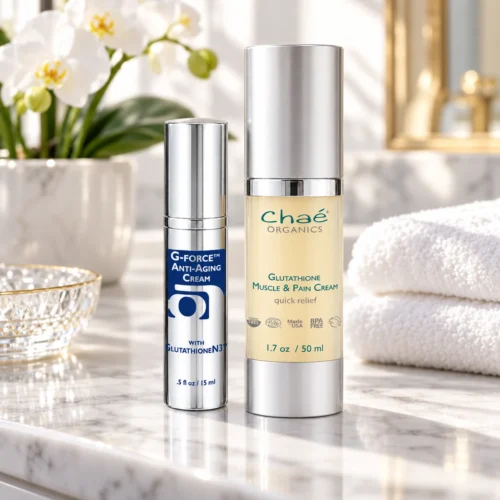
Our two glutathione creams in one box: a rich antioxidant face cream and a cool-then-warm body cream.
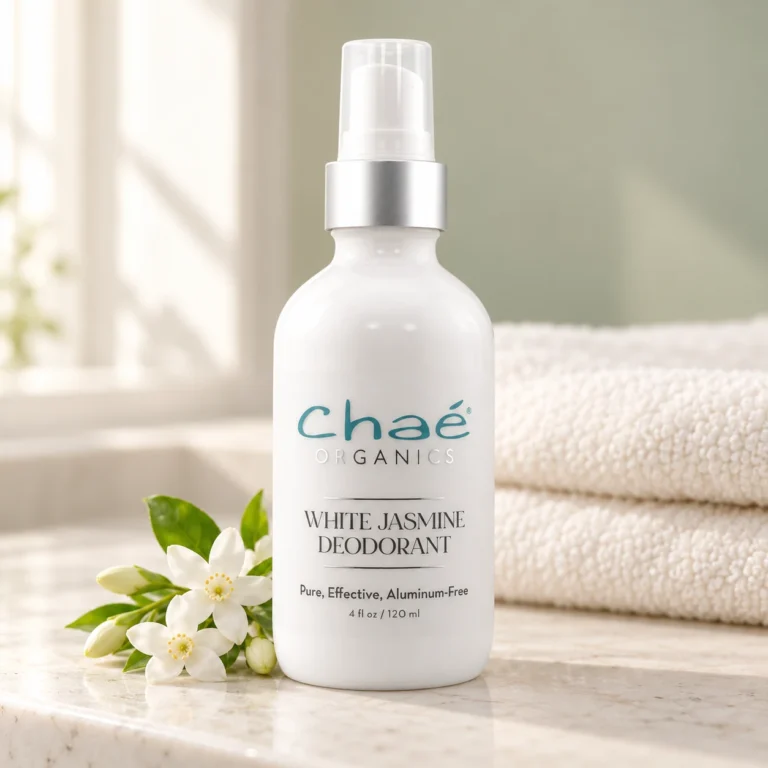
Deodorant and antiperspirant aren’t the same thing. Here’s what aluminum-free deodorant does, what to expect when you switch, and what to look…
Why a gentle toothpaste matters for your enamel, how popular brands compare on abrasiveness, and what goes into (and stays out of)…
Chaé’s four-step routine (cleanse or exfoliate, mist, serum, moisturize) with the products to reach for at each step, whatever your skin type.
Sign up for ToxicFree® tips, new arrivals and member-only offers. Your code arrives in your welcome email.

Sign in to check out faster, track orders and manage Subscribe & Save.