
Take Control of Your Health and Wellbeing with Essential Oils
Find out what essential oils are, how they work, and how they can help you get the results you want!
 Certified ToxicFree® · Cruelty-free · Made in Colorado
Lemon oil smells exactly like zesting a fresh lemon: sharp, clean and sunny. It can also react with sunlight on skin, depending on how it was made. Here is what to know, the safe limit, and how to use it around the house.
Few scents say “clean” as clearly as lemon. Zest one over a bowl and the whole kitchen changes. Lemon essential oil is that zest, concentrated: the oil held in the tiny glands you can see dotting the rind.
It is one of the most useful oils to keep around, for the diffuser, homemade cleaning sprays, dish soap and laundry. On skin, it comes with one rule worth learning properly, because cold-pressed lemon oil is phototoxic.
The short version
The lemon is the fruit of a small evergreen tree. Its scent lives in the peel, not the juice: bend a strip of rind and you can feel the fine, fragrant spray of oil on your fingers.

Lemon oil is made in two main ways. Most is cold-pressed: the peel is pressed or rasped mechanically and the oil separated from the juice and water, without heat. Some is distilled. The difference matters most in one place: how the oil behaves on skin in the sun.
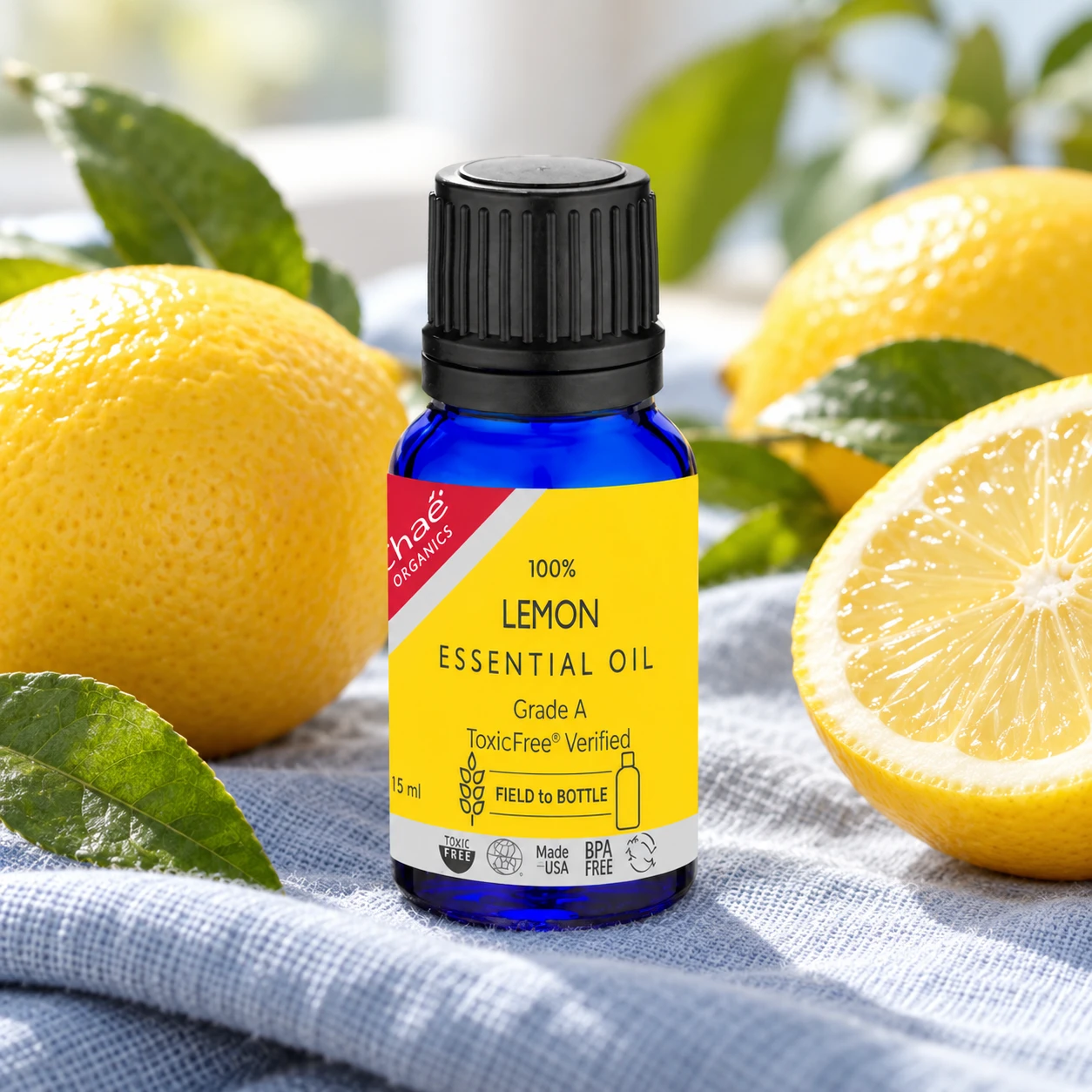
Ours is 100% pure, undiluted lemon peel oil, with no additives or fillers. Our label doesn’t state the method, so read on for which guidance to follow.
The most common lemon mix-up is lemongrass, which is distilled from the leaves of a tufted aromatic grass. It is a different plant with a different scent, and it is stronger on skin, so it has its own limits (more in our lemongrass guide). If you’re after lemon itself, look for Citrus limon on the label.
It depends on how it was made. Cold-pressed lemon oil is phototoxic; distilled lemon oil isn’t. Pressing the peel carries over small amounts of furocoumarins, sun-reactive compounds like the ones in bergamot and lime. They are too heavy to travel with steam in any real amount, so distilled lemon is considered non-phototoxic.
Our label doesn’t name the method. It does say to keep the oil off skin that will be in the sun, so treat ours as phototoxic and follow the cold-pressed limits below.
A reaction doesn’t hurt at first. The skin can redden or blister hours after sun exposure, and patchy brown marks can last for weeks or months.
In Essential Oil Safety, Robert Tisserand and Rodney Young set a maximum of 2% for cold-pressed lemon oil on skin that will be exposed to sunlight. IFRA, which sets the fragrance industry’s safety standards, uses the same 2% for leave-on products. Here is what that looks like:
If you go above 2%, the Tisserand Institute’s advice is to keep that skin out of sunlight and UV for at least 12 hours, either by covering it completely or by staying indoors. Before sunbathing or a tanning bed, skip phototoxic oils on skin completely.
Two more points:
Lemon is a sharp, sparkling top note of fresh lemon zest: clean, sunny and just slightly sweet. It is the classic scent of a fresh kitchen, and a cheerful one for any room.
A few diffuser blends to try, in drops for a standard water diffuser:
Start with 3 to 5 drops in the water reservoir whenever a room needs a cheerful lift. Phototoxicity is about oil left on skin, so diffusing doesn’t raise it. Diffuse for 30 to 60 minutes at a time rather than all day, in a room with some airflow.
For a fresh lemon scent in the kitchen or bathroom, mix in a 100 ml (about 3.4 oz) glass spray bottle:
Use glass: concentrated citrus oil can soften some plastics. Shake well before every spray, since oil and water separate, and test on a hidden spot before spraying fabric or finished surfaces. Think of it as a fresh scent for a clean surface: essential oils add scent, they don’t replace your cleaner or disinfectant.
A few drops in a bottle of unscented dish soap or liquid laundry detergent give them a lemon lift. Because these rinse away, there is no sun issue.
For a sunny body oil, stir 6 drops lemon into 30 ml (1 oz) of jojoba or sweet almond oil, about 1%. Patch test on your inner arm first, keep it away from your eyes, and, as our label says, use it only on skin that will stay out of the sun.
Search “lemon oil benefits” and you will find claims about immunity, detox and germs, along with advice to add lemon oil to your drinking water. Much of that comes from lab studies or small, specific trials, not from a diffuser at home, and we don’t recommend swallowing essential oils at all. In the U.S., an oil sold to treat a health problem is regulated as a drug; ours is sold for its scent, and we don’t make health claims for it. If you are managing a health condition, talk with your doctor.
A few things on the label tell you a lot:
Lemon is the everyday citrus: sharp, clean and cheerful in the diffuser, the cleaning spray and the laundry. On skin, keep to 2% or less where the sun will reach, or 12 hours covered up; our label simply keeps it off sun-bound skin. Keep it fresh, and your whole home will smell like a just-zested lemon.
Cold-pressed lemon oil is; distilled lemon oil isn’t. Our label doesn’t state the method but says to keep the oil off skin that will be in the sun, so treat ours as phototoxic.
Tisserand and Young’s maximum for cold-pressed lemon is 2%, and IFRA uses the same figure: 12 drops in 30 ml (1 oz) of carrier oil, or 4 drops in a 10 ml roller.
If you’ve used more than 2% on skin, keep that skin out of sunlight and UV, including tanning beds, for at least 12 hours, by covering it or staying indoors.
No. Lemon oil comes from the peel of the lemon. Lemongrass oil is distilled from the leaves of a grass. They smell different and have different safety rules.
Counting from the day you open it, about 6 to 12 months at room temperature, or 1 to 2 years tightly capped in the fridge. If it smells flat or “off”, replace it.
Every Chaé essential oil is 100% pure, Grade A, Certified ToxicFree® and Leaping Bunny certified, with the plant named on the label. Start with lemon, then build a blend.
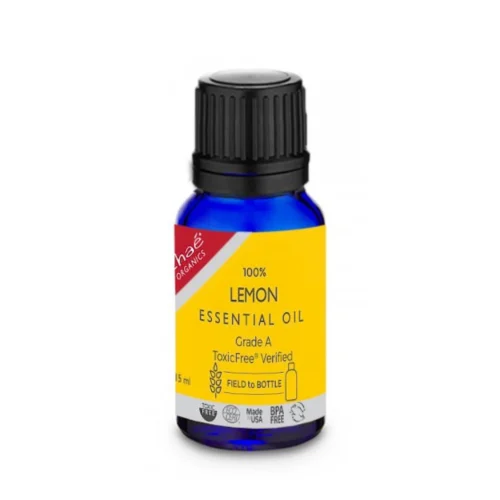
Sharp, sparkling lemon zest—sunshine in a bottle for your mood and your home.
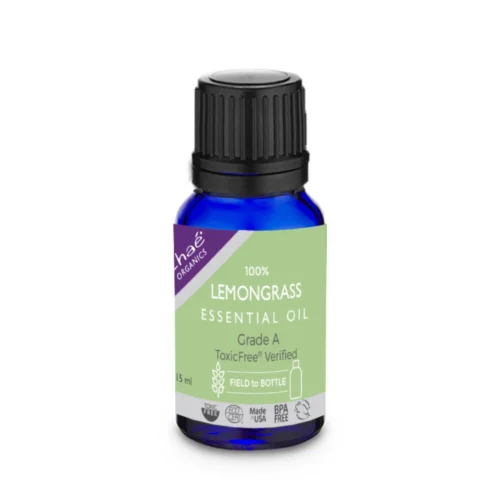
Savory, invigorating lemongrass from young leaves harvested on sunny days.
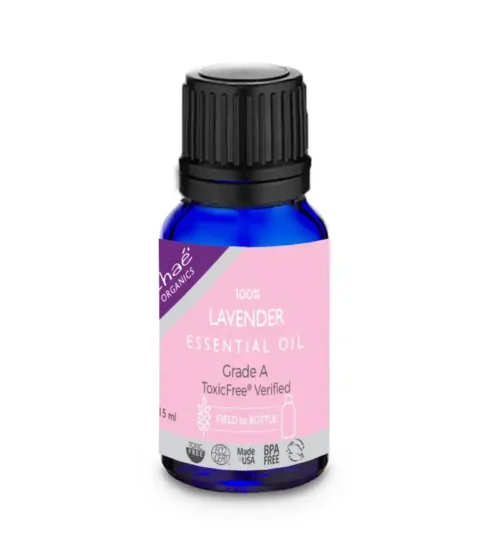
Sweet, herbal lavender from the first blooms of the season—made for slow evenings.
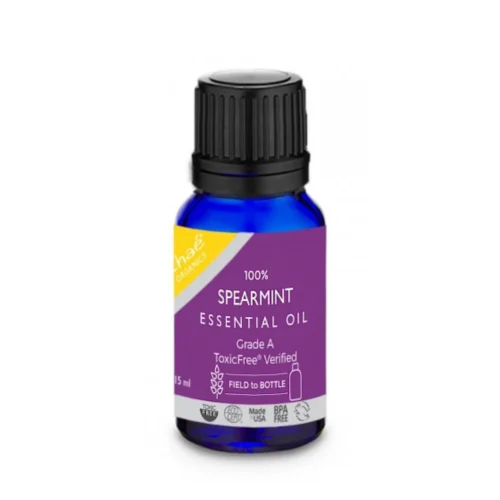
The sweet, easygoing mint: soft, rounded spearmint that’s gentler than peppermint.

Zesty, green lime with a sweet edge—the wakeful scent of an early summer morning.
Find out what essential oils are, how they work, and how they can help you get the results you want!
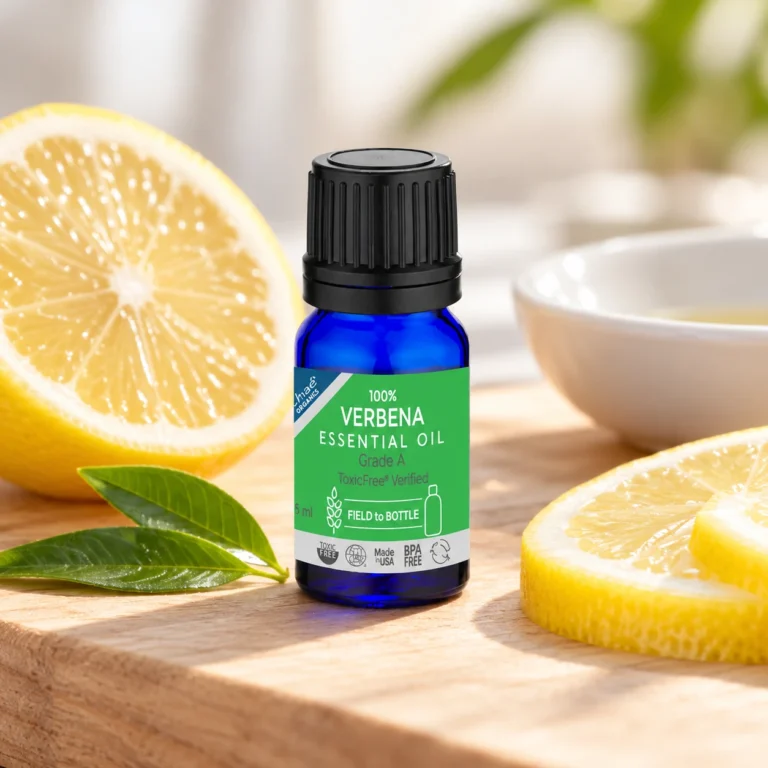
Verbena essential oil (Verbena officinalis): how it differs from lemon verbena, what it smells like, diffuser and room-mist blends, and why it's…
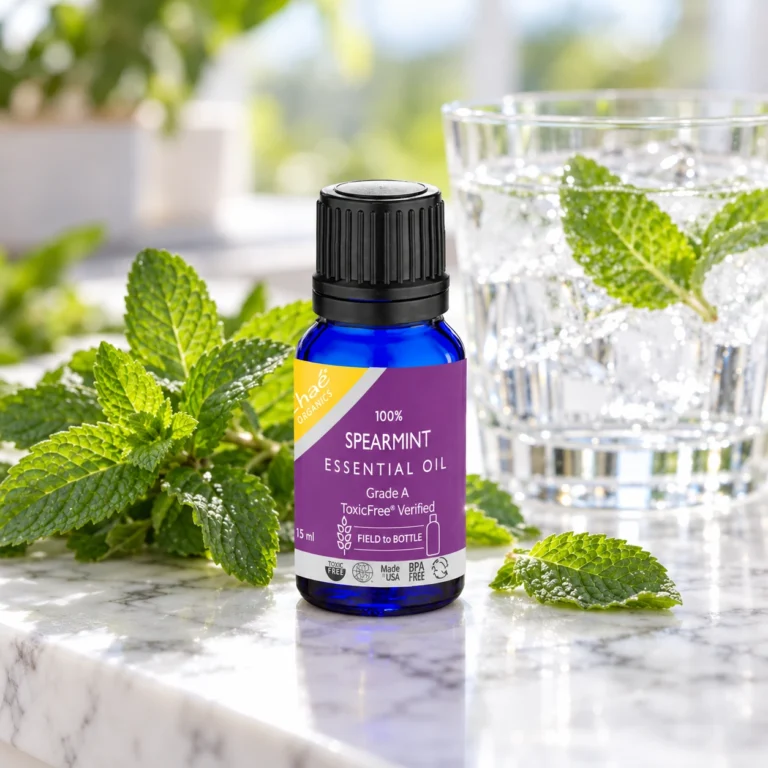
What spearmint essential oil is, how it differs from peppermint, diffuser blends and an easy room spray, and how to use it…
Sign up for ToxicFree® tips, new arrivals and member-only offers. Your code arrives in your welcome email.

Sign in to check out faster, track orders and manage Subscribe & Save.