
Chaé Skincare Regimen – 4 Simple Steps for all skin types
Chaé’s four-step routine (cleanse or exfoliate, mist, serum, moisturize) with the products to reach for at each step, whatever your skin type.
 Certified ToxicFree® · Cruelty-free · Made in Colorado
What “natural” really means on a label, why organic ingredients tend to be gentler and richer in antioxidants, and how to switch your routine the smart way.
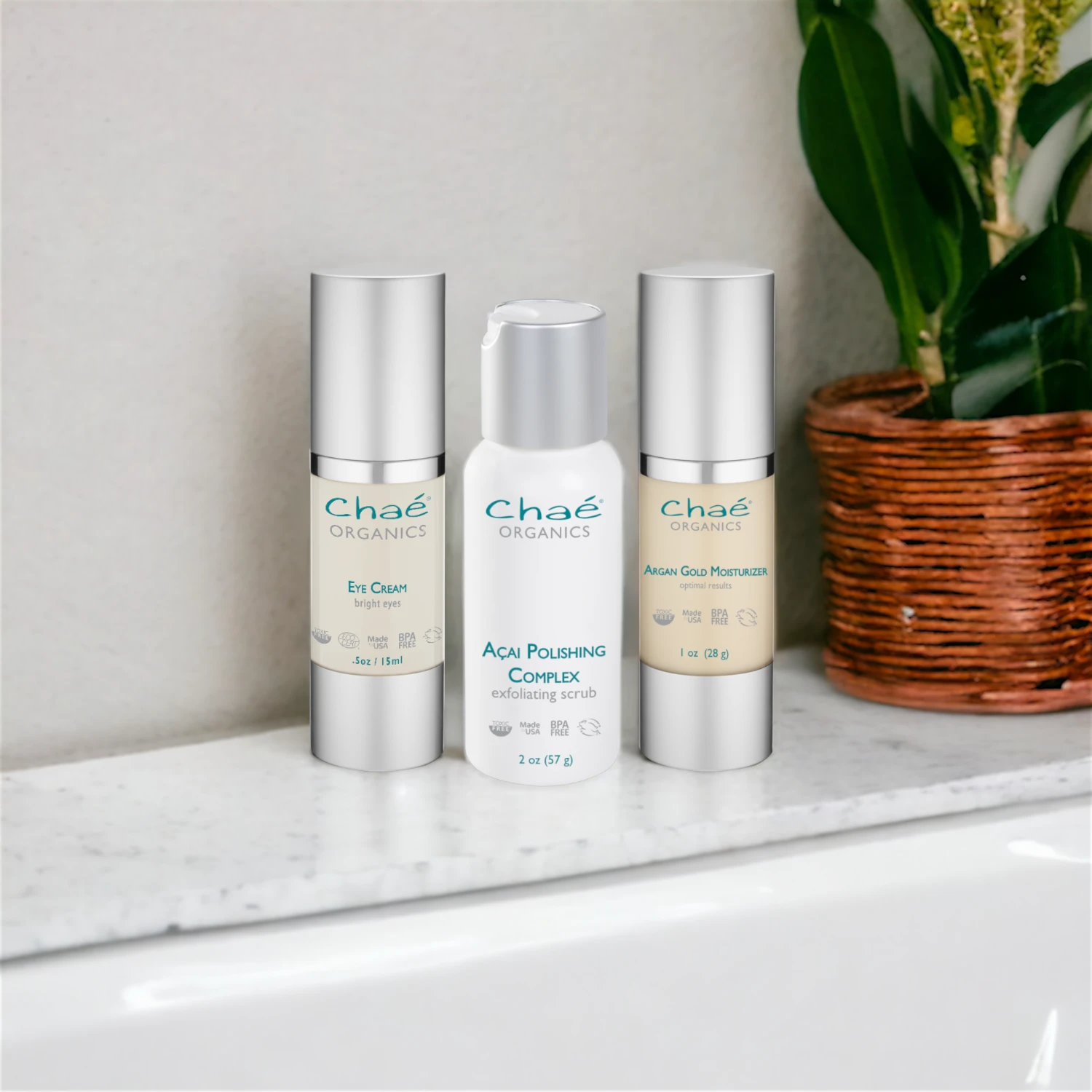
Natural skincare uses ingredients sourced from nature — plant extracts, essential oils and minerals — rather than compounds synthesized through chemical processes. Synthetic products, by contrast, typically rely on artificial compounds and preservatives designed to extend shelf life and boost performance.
The idea isn’t new. Cultures throughout history have used herbs, oils and fruits to care for their skin. What’s changed is awareness. As more people learn about the potential downsides of synthetic chemicals in personal care, demand for toxic-free skincare keeps rising, along with interest in products that support both a healthier lifestyle and a healthier planet.
The short version
Here’s the catch: the term “natural” isn’t uniformly regulated in the beauty industry, so it gets interpreted in very different ways. Some brands market products as natural while still including synthetic ingredients.
That’s why it pays to learn about ingredient sourcing and the manufacturing processes behind the products you buy. Sustainable sourcing — harvesting raw materials responsibly to minimize environmental impact — is a fundamental part of the natural skincare movement. When you favor brands with eco-friendly practices and transparent ingredient lists, you can make choices that support your health and well-being. Our guide to understanding “organic” and “natural” goes deeper on the labels.
Toxic-free skincare prioritizes natural components over synthetic chemicals and additives. Organic ingredients tend to be gentler on the skin, lowering the risk of the irritation and allergic reactions that harsher chemicals are known for. If you have sensitive skin or a condition such as eczema, natural alternatives can mean a more comfortable experience and healthier-looking skin.
Plant oils and extracts are known to contain vitamins A, C and E, along with other beneficial compounds that help protect skin from environmental stressors. Their antioxidants help combat free radicals, supporting the skin’s ability to repair itself and ward off premature aging. Over time, that adds up to a radiant, healthy-looking complexion.
Many conventional products deliver instant results, often at the expense of long-term skin health. Botanical ingredients work differently: they nourish and moisturize and encourage healthy skin renewal. Build toxic-free skincare into your routine, and you can see lasting improvements and the natural glow of well-nourished skin.
Synthetic ingredients show up in a wide range of cosmetic products, and some can pose risks to your health and the environment. Many are irritants and allergens that can contribute to skin conditions such as dermatitis and eczema. Beyond the surface, some can disrupt the body’s hormonal balance, with long-term health consequences.
Findings like these are a big reason natural skincare has grown so popular. Products made with organic ingredients avoid these harmful toxins and draw on the soothing properties of plants instead. The shift has also raised demand for ingredient transparency, pushing brands to disclose their formulations.
The takeaway: stay vigilant. Scrutinize labels, choose products with natural components and favor brands that put transparency and safety first. For a closer look at what to avoid, see the top 5 skincare ingredients to avoid and their natural alternatives.
Moving to a natural skincare routine goes best with a thoughtful approach, so you end up with products that are both effective and safe for your skin.
Don’t skip this step. Apply a small amount of the product to a discreet area of skin and watch for any reaction over 24 hours. If no irritation occurs, you can confidently expand your use.
There’s a bonus, too. Choosing natural skincare has a positive environmental impact. By opting for organic ingredients, you support sustainable practices and the health of the ecosystem, making your routine an ethical commitment to both your own health and the planet.
Not uniformly. Some brands call products natural while still including synthetic ingredients, so read the full ingredient list and learn about how products are sourced and made.
They avoid the harsher synthetic chemicals commonly associated with irritation and allergic reactions, which makes them a good fit for sensitive skin or skin prone to eczema.
This article highlights synthetic fragrances, parabens, sulfates and phthalates. Parabens can mimic estrogen in the body, and phthalates have been associated with reproductive health issues.
Apply a small amount to a discreet area of skin and watch for a reaction over 24 hours. If there’s no irritation, you can use it more widely.
Yes. Your skin may take time to adjust, and some breakouts or texture changes can happen early in the transition. Introducing one or two products at a time makes it easier to see how your skin responds.
Starting with one or two products? A gentle cleanser and a nourishing moisturizer are the first steps this article suggests — NuClarity Cleanser and Argan Collagen Moisturizer fit the bill — and Perfection Brightening Serum brings vitamin C and botanicals into your routine.

Clean, calm, and balanced—without stripping what your skin needs.

Deep hydration. Stronger barrier. Firmer-looking skin—without heaviness.

Vitamin C glow—without the sting. Brighter tone, calmer skin, and a smoother look.

Chaé’s four-step routine (cleanse or exfoliate, mist, serum, moisturize) with the products to reach for at each step, whatever your skin type.

Seven core steps, plus the habits around them — customizing, masks, lifestyle, nutrition, life stages, and ethical choices — for healthier, glowing…

Understanding your skin type is essential in establishing an effective skincare routine. This comprehensive guide covers how to identify oily, dry, combination,…
Sign up for ToxicFree® tips, new arrivals and member-only offers. Your code arrives in your welcome email.

Sign in to check out faster, track orders and manage Subscribe & Save.